
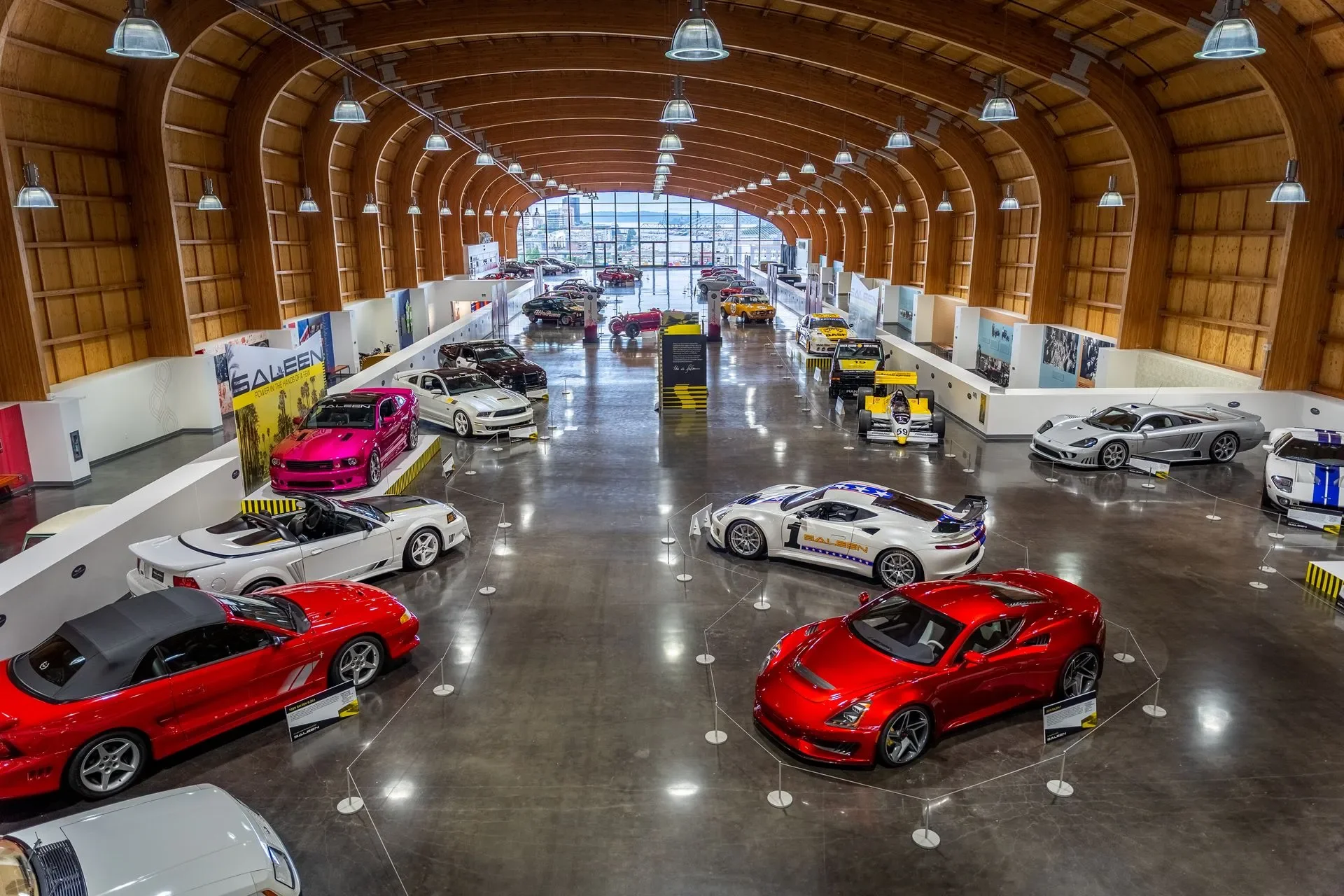
A Visit to LeMay – America’s Car Museum
A walk through American design, speed, spectacle, and memory
A great car museum should do more than gather important machines under one roof. It should help explain why they mattered in the first place.
That is what stood out most during our visit to LeMay – America’s Car Museum in Washington. The collection is not the biggest or the broadest, but what makes the museum compelling is the way it presents the American automobile not as a single story, but as a layered one: engineering, industry, design, competition, aspiration, entertainment, utility, and national identity all meeting in one place.
What becomes clear as you move through the museum is that American car culture has never been one thing. It has always been an expansive, restless idea. It produced stripped-down competition machines and flamboyant customs. It produced elegant grand tourers and rough working trucks. It produced coachbuilt luxury, high-volume mobility, motorsport legends, dream cars, movie cars, and machines that were built simply to make life easier for ordinary people. LeMay understands that range, and the museum is stronger because of it.
The building itself helps set the tone. Some museums flatten their collections into rows of artifacts. LeMay gives the cars room. Room to breathe, room to be read properly, room for their proportions and intentions to speak. The result is that the visit feels less like scanning inventory and more like walking through a long and unfolding argument about what the automobile meant, and still means.
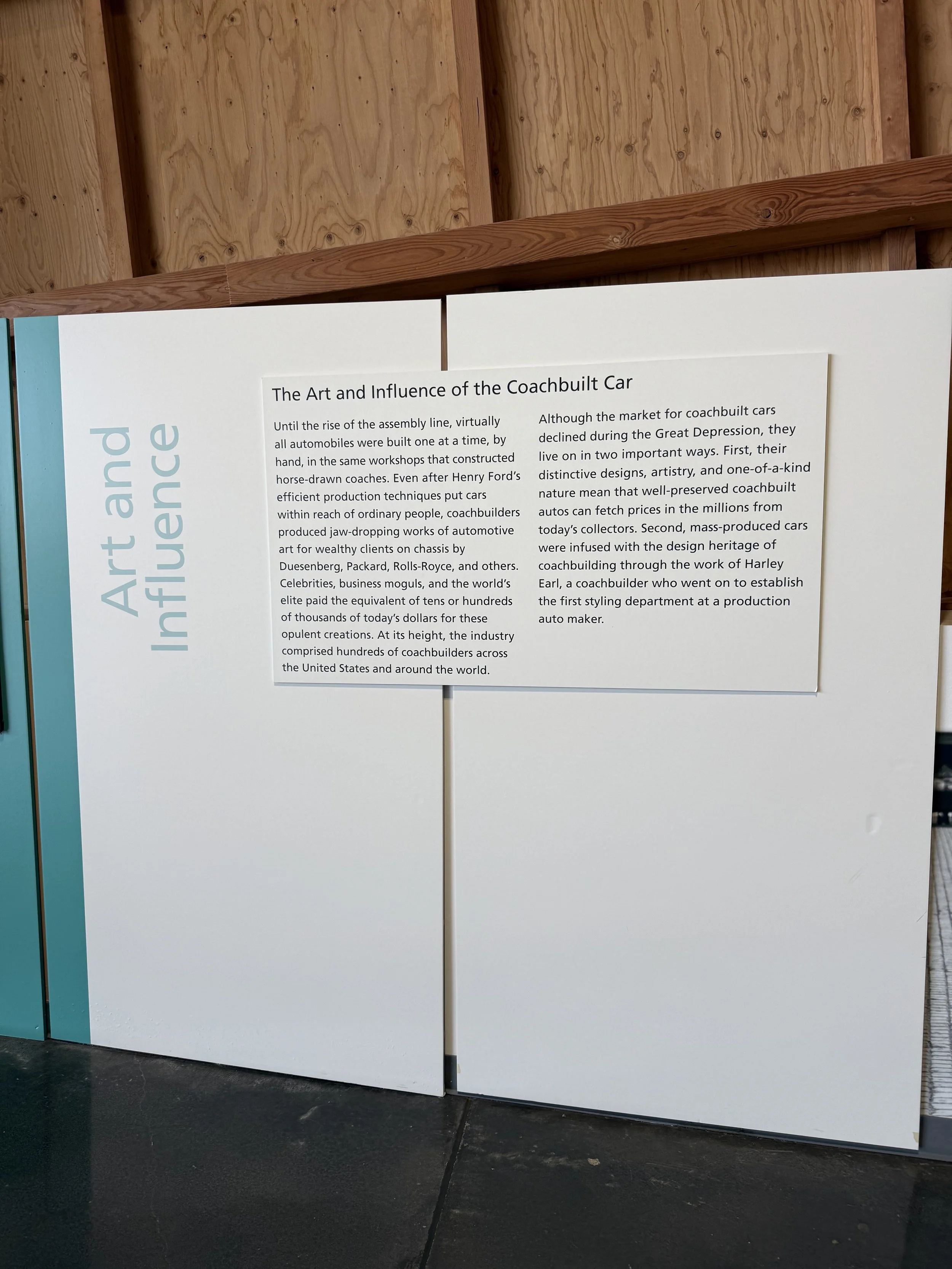
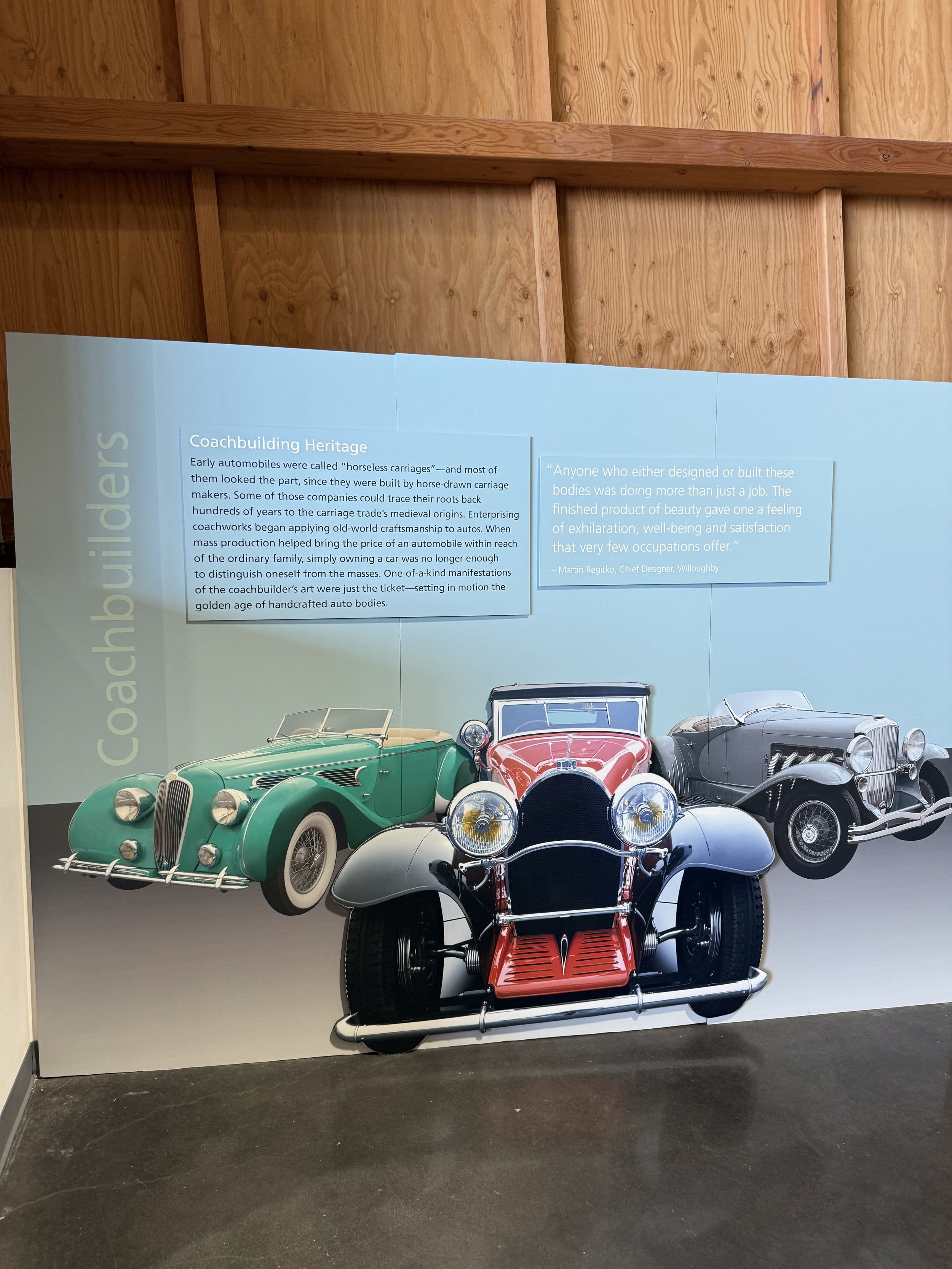
What we appreciated most was the museum’s willingness to move between categories without losing clarity. You can spend time with brass-era cars and early racers, then move into coachbuilt design, postwar optimism, American performance, British sports cars, service culture, competition history, and experimental futurism. Rather than feeling scattered, it feels honest. The automobile did not evolve in a straight line, and the best museums do not pretend that it did.
For us, the visit worked because it respected cars on multiple levels at once. It respected them as design objects. It respected them as historical artifacts. It respected them as tools. It respected them as cultural symbols. Most importantly, it respected them as things people once loved enough to preserve, race, customize, restore, and remember. Cars are meant to tell stories that extend well past the people who initial invented them.
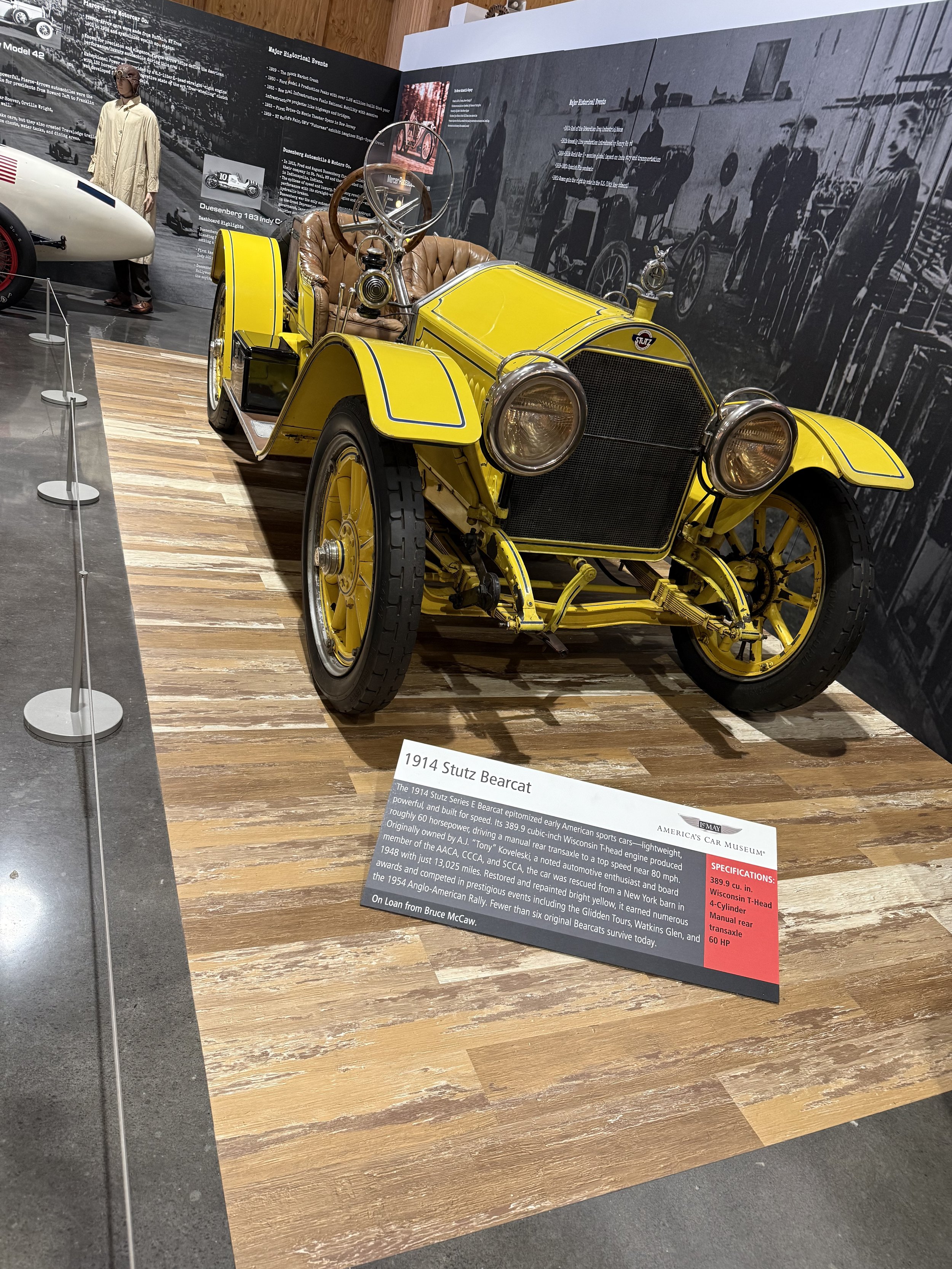
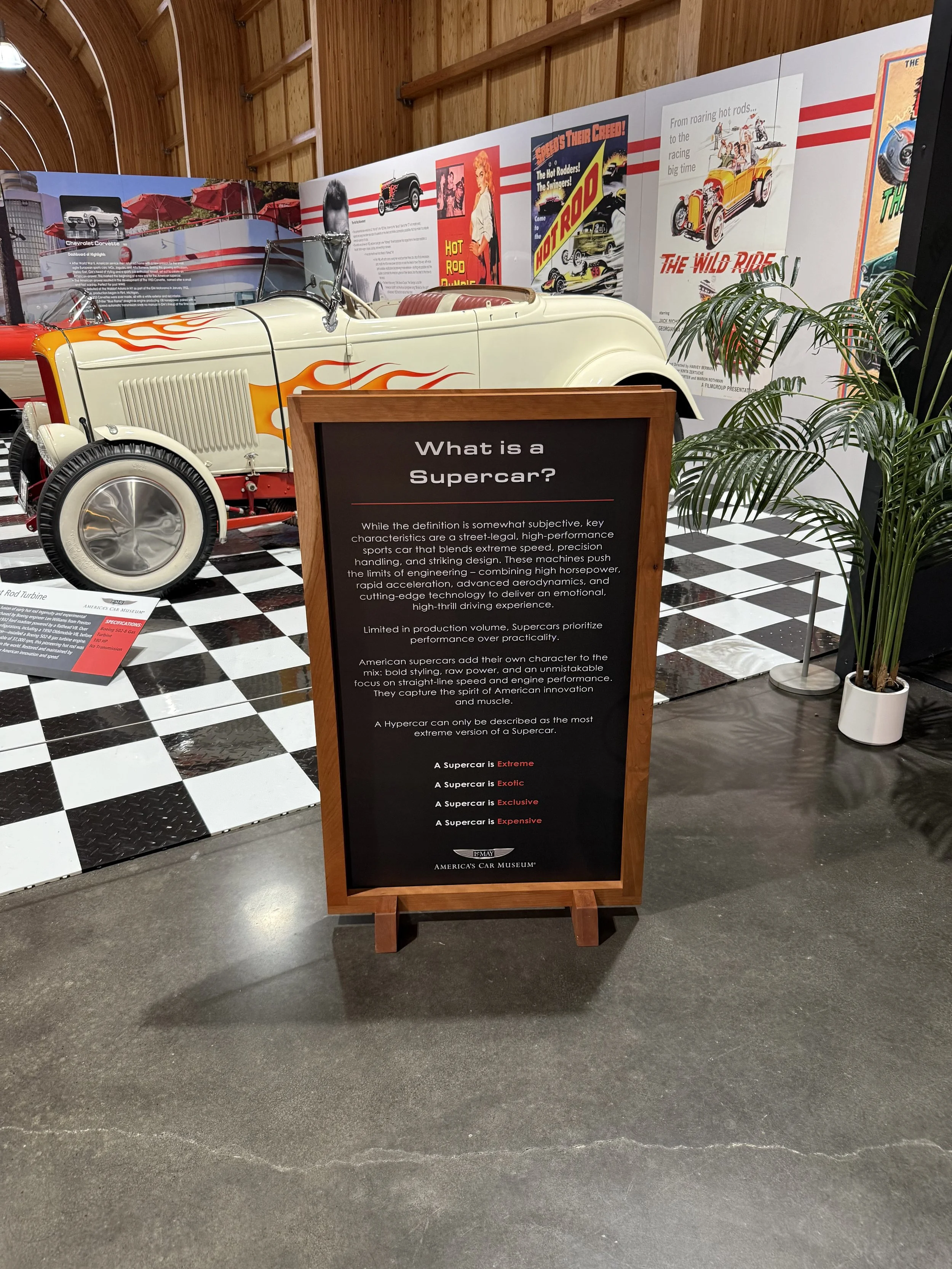
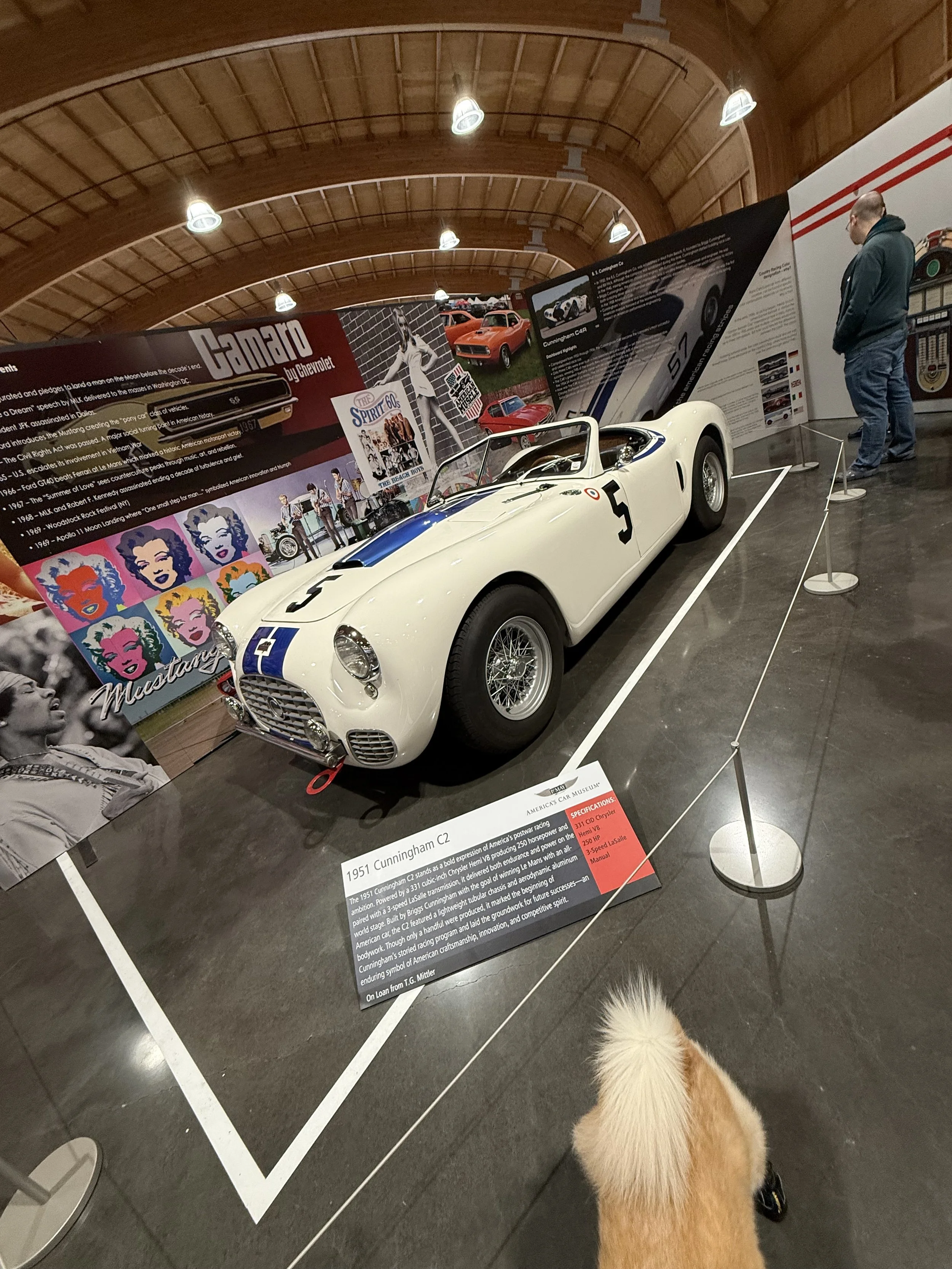
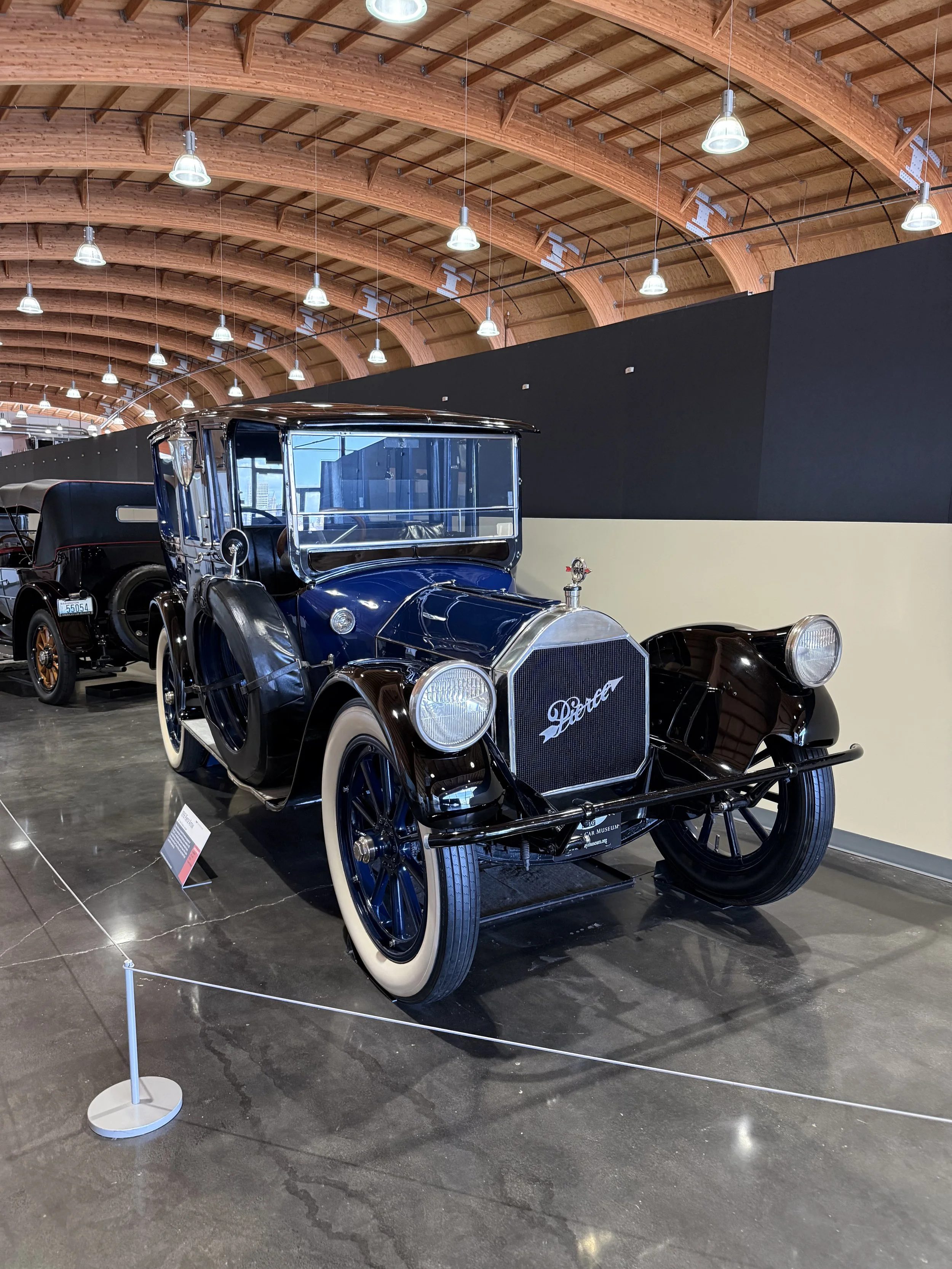
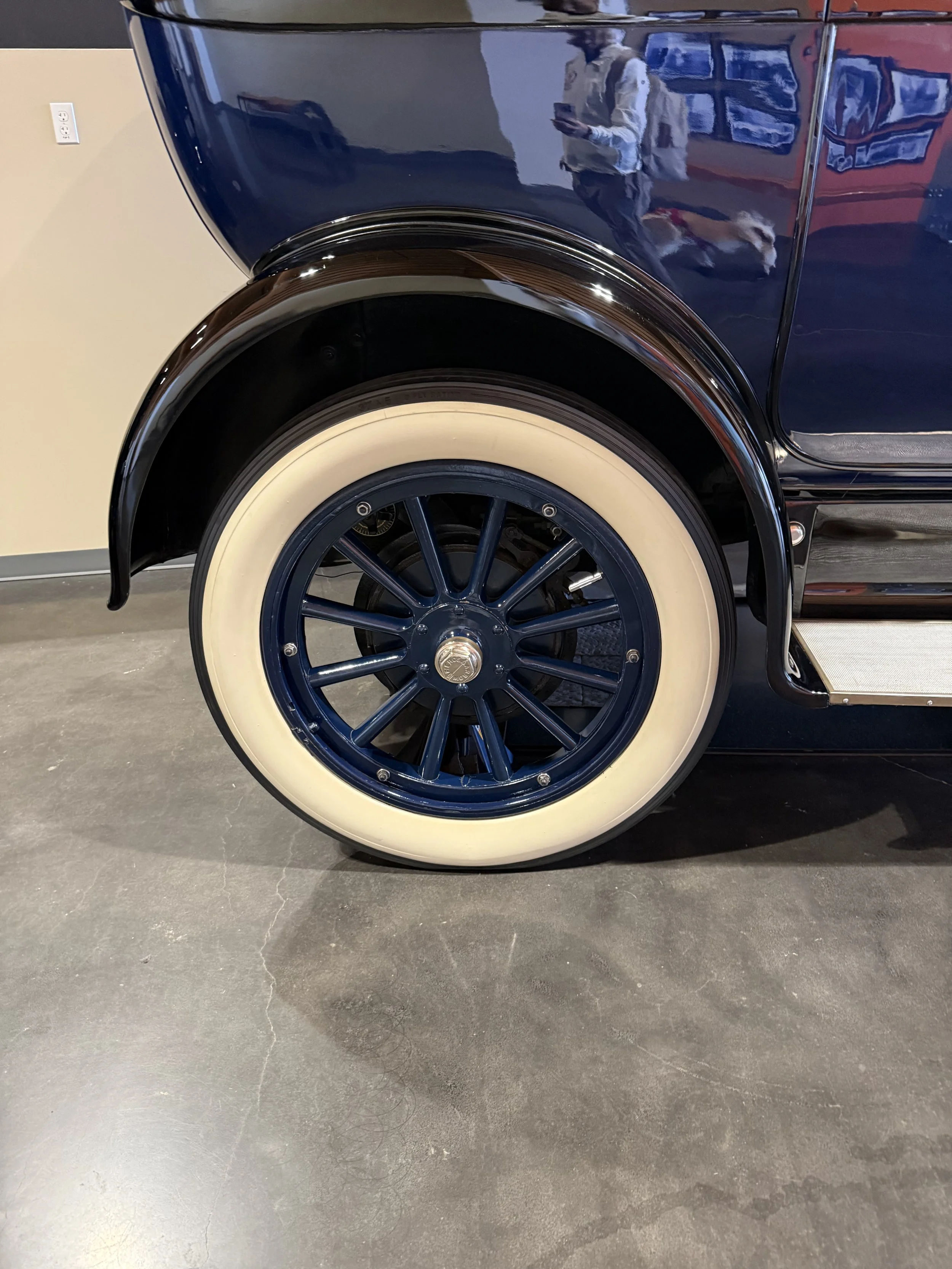
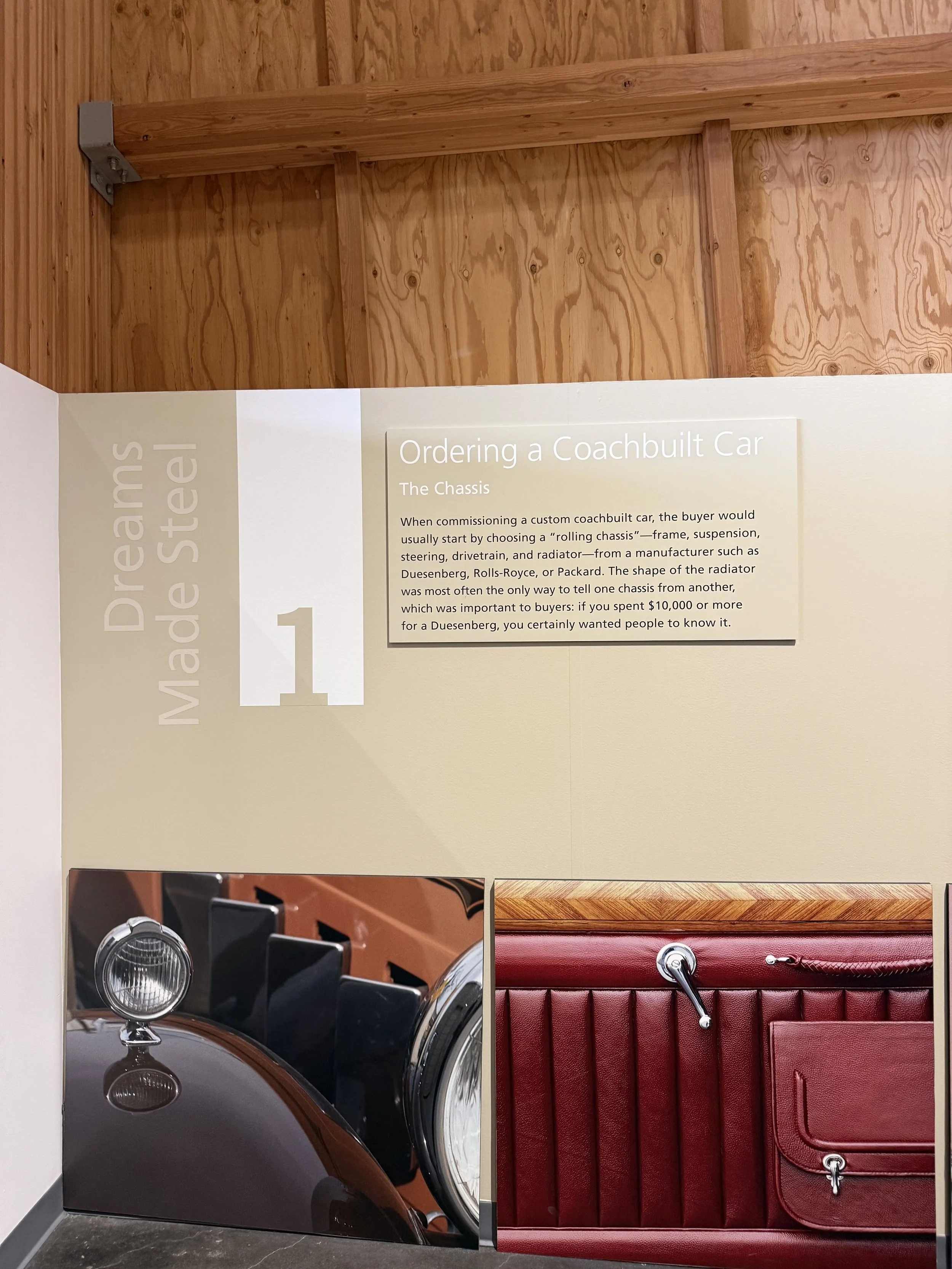
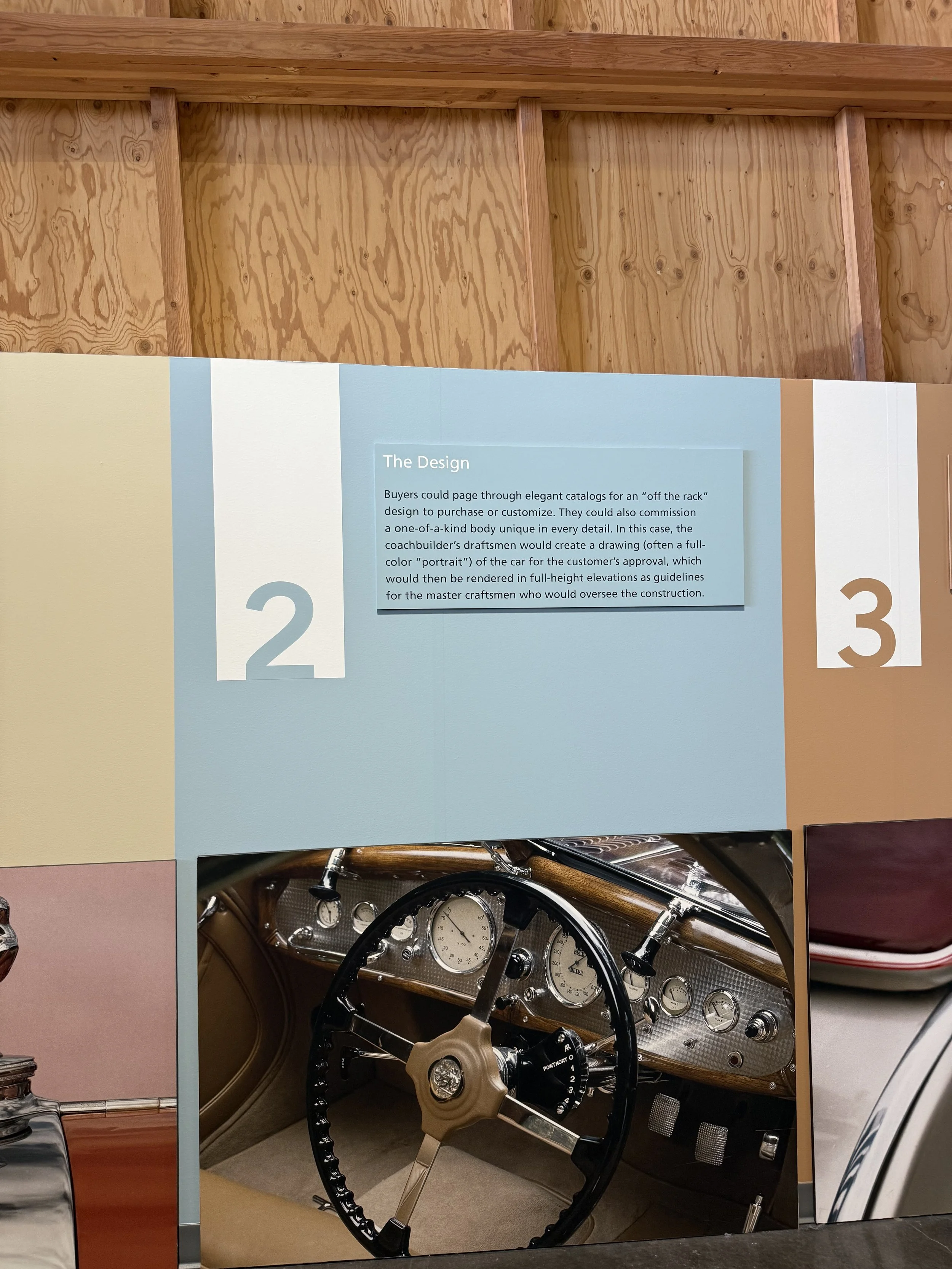
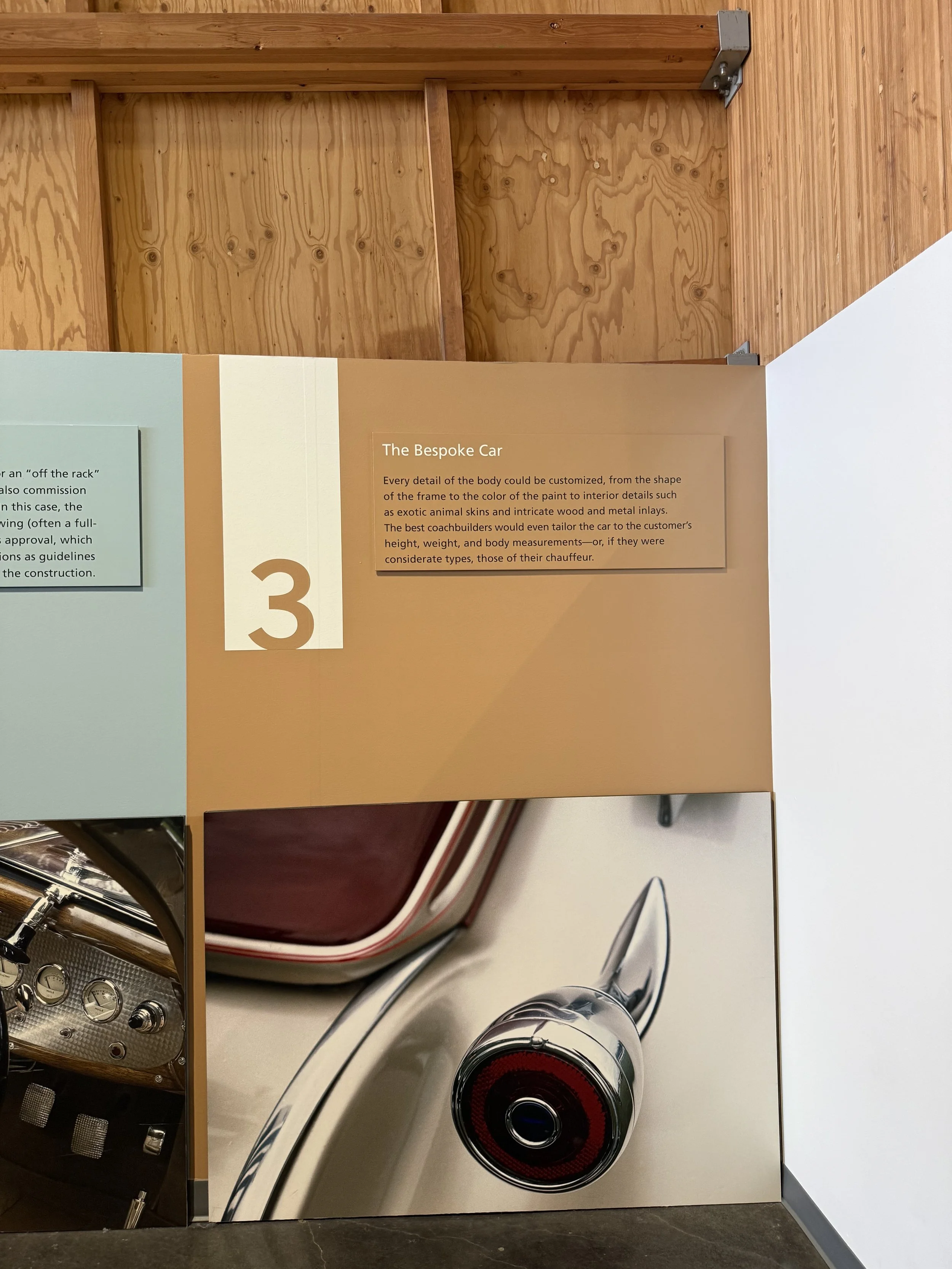
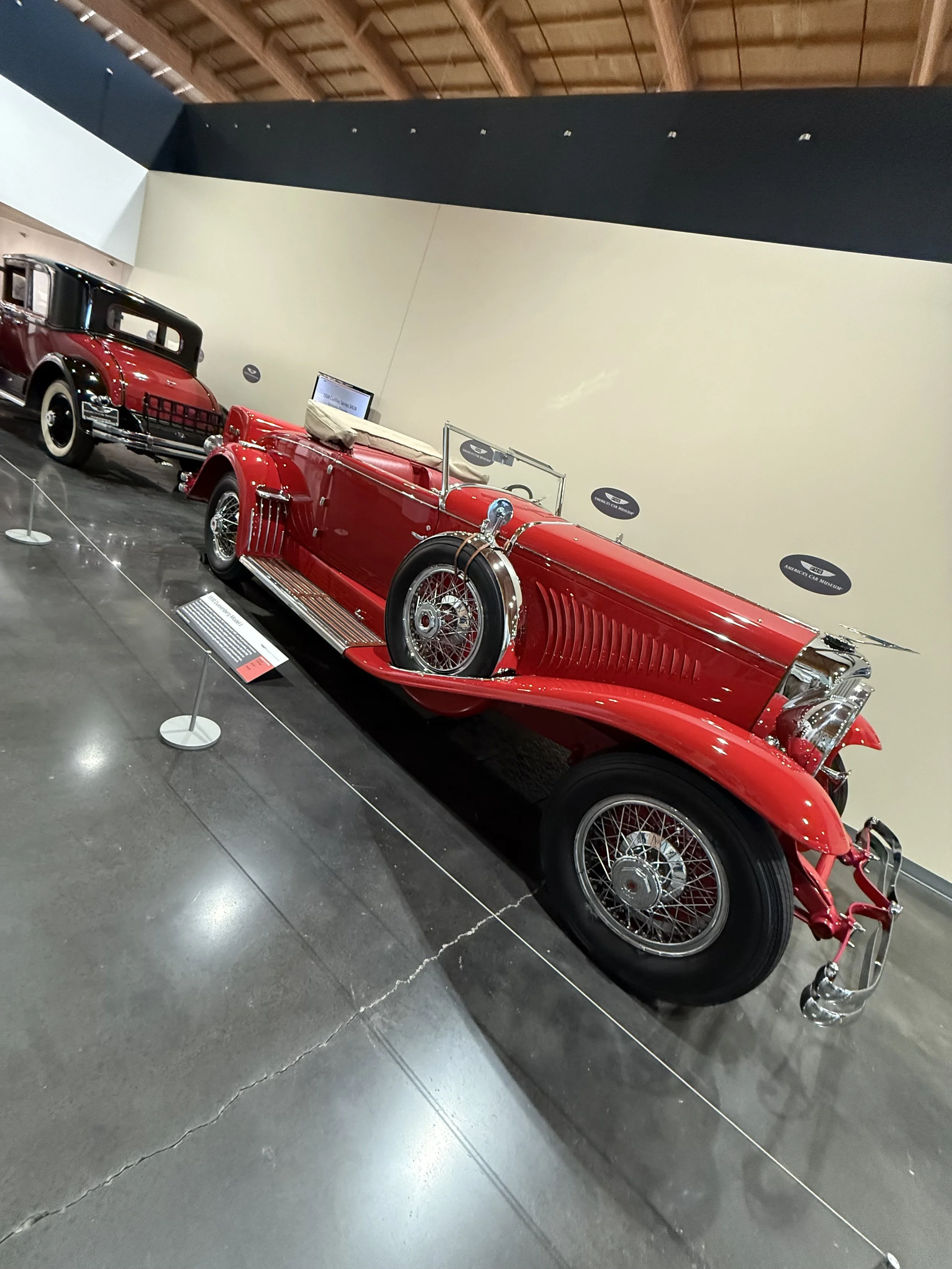
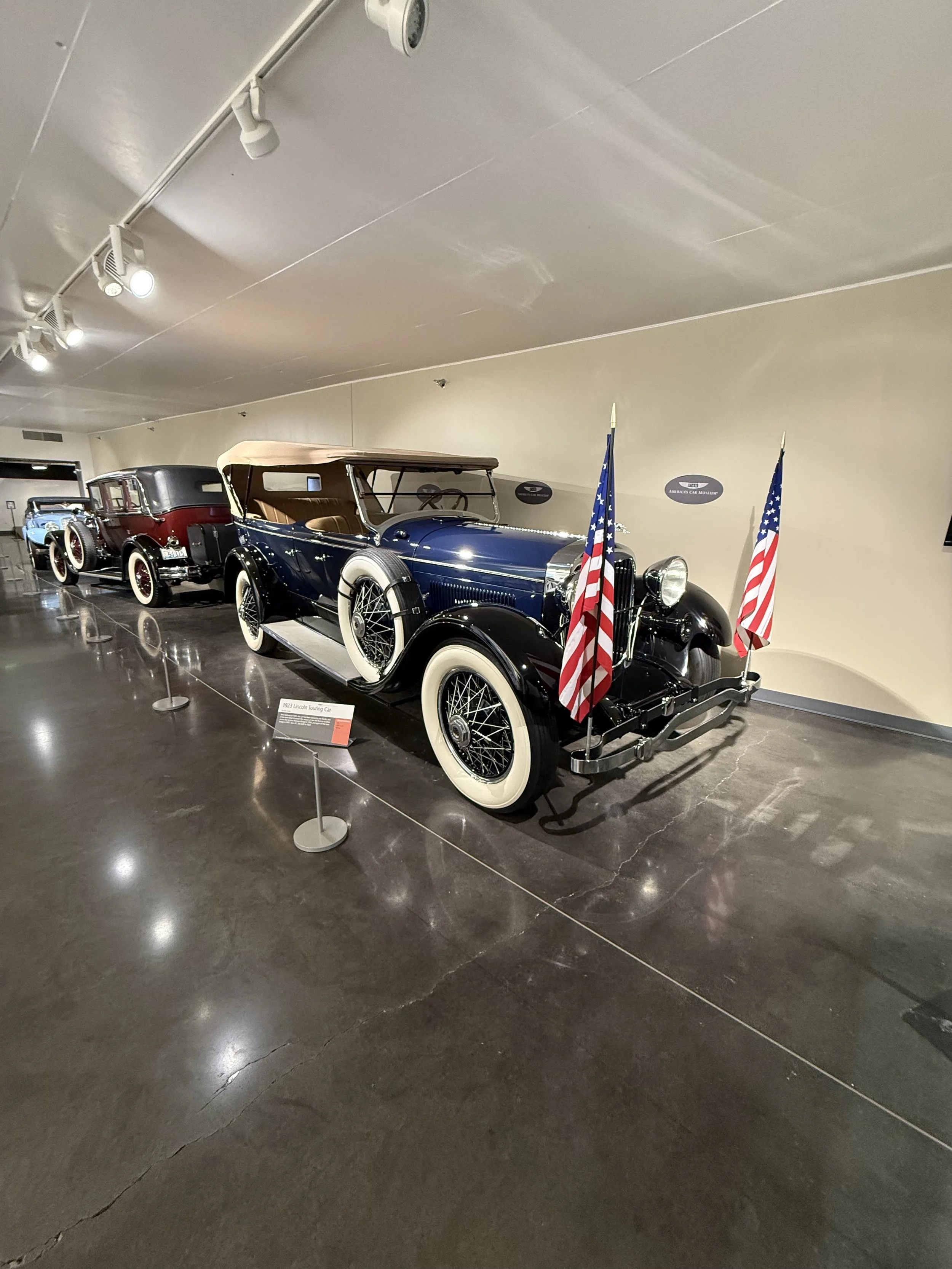
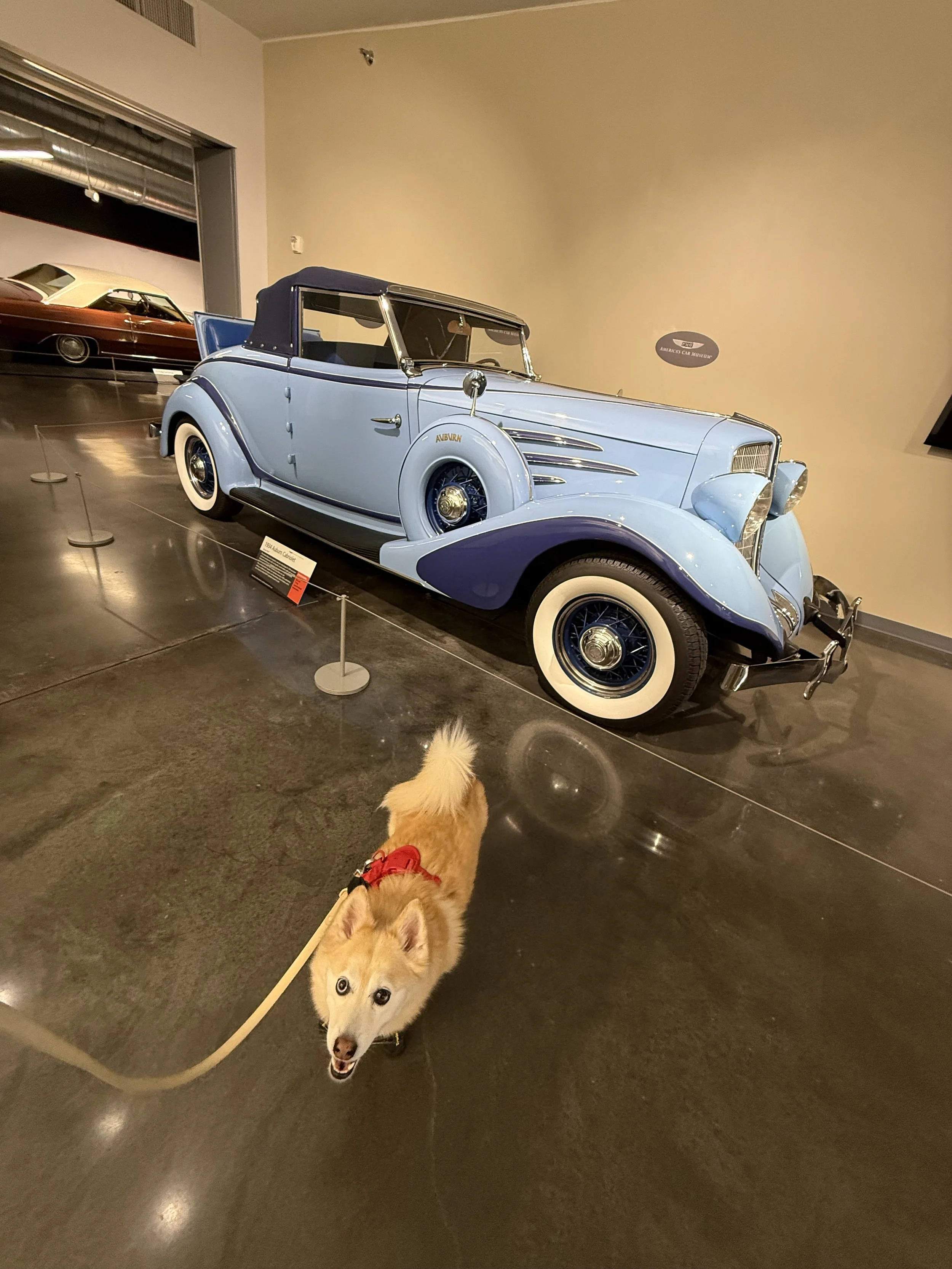
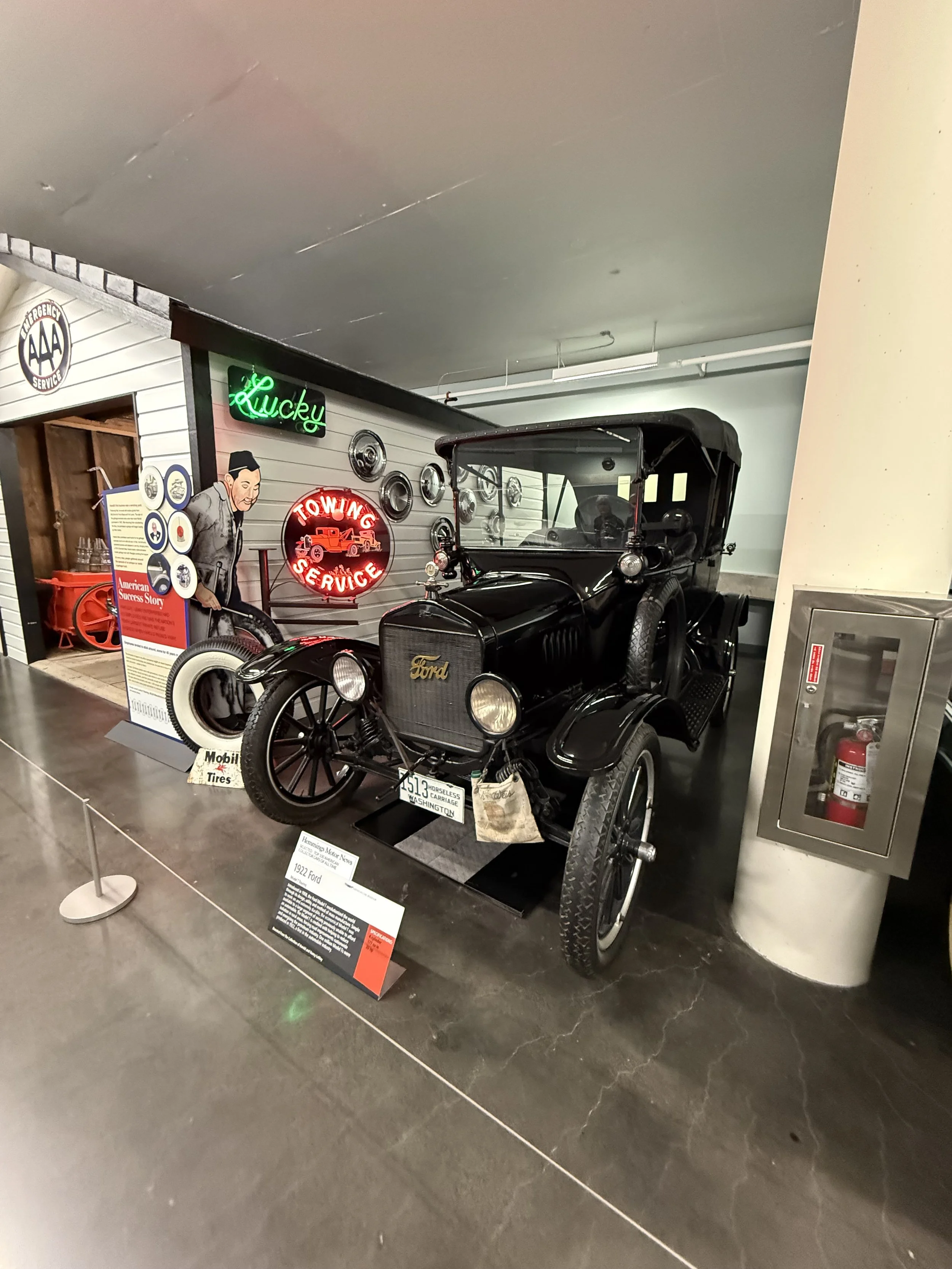
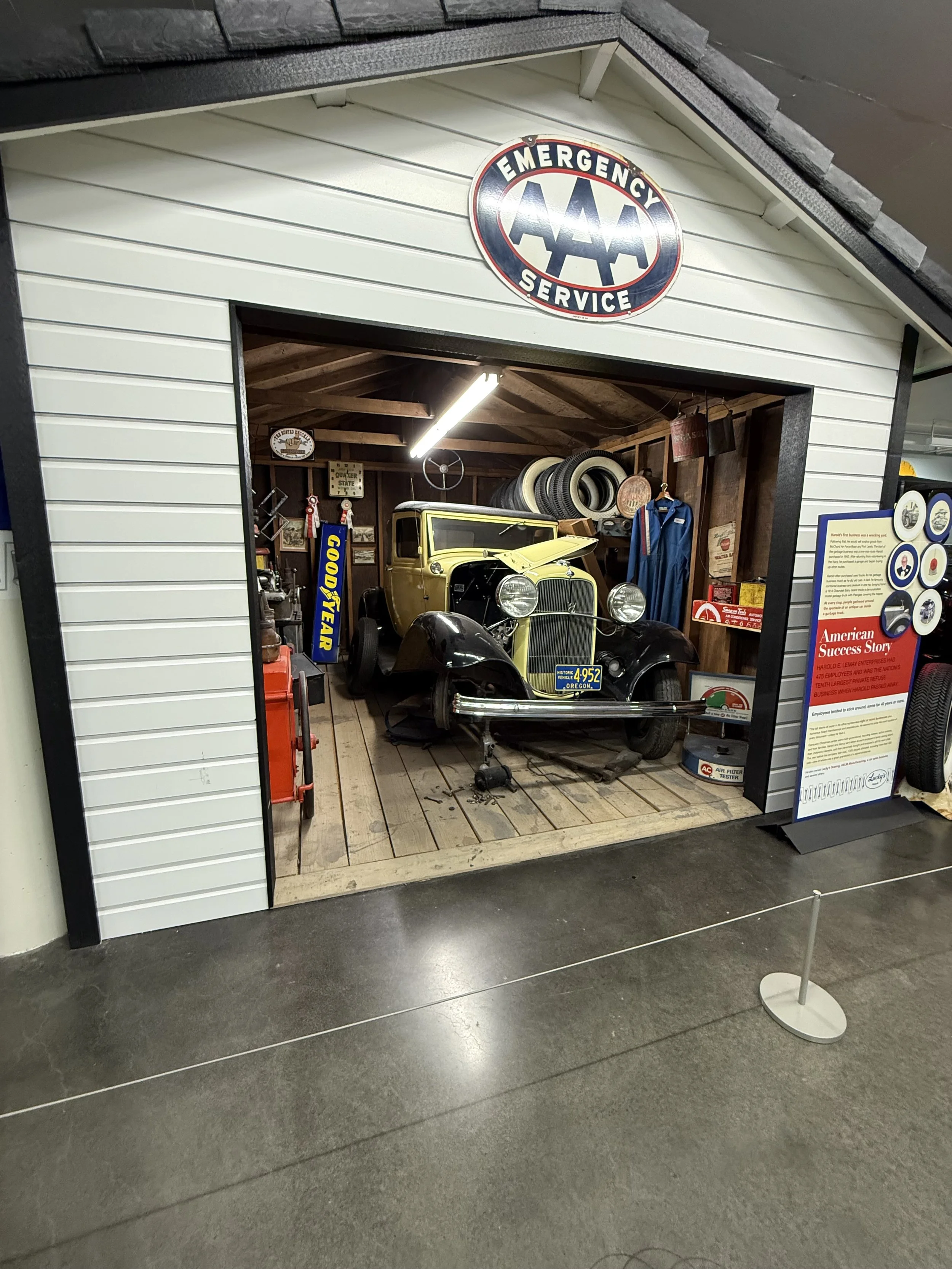
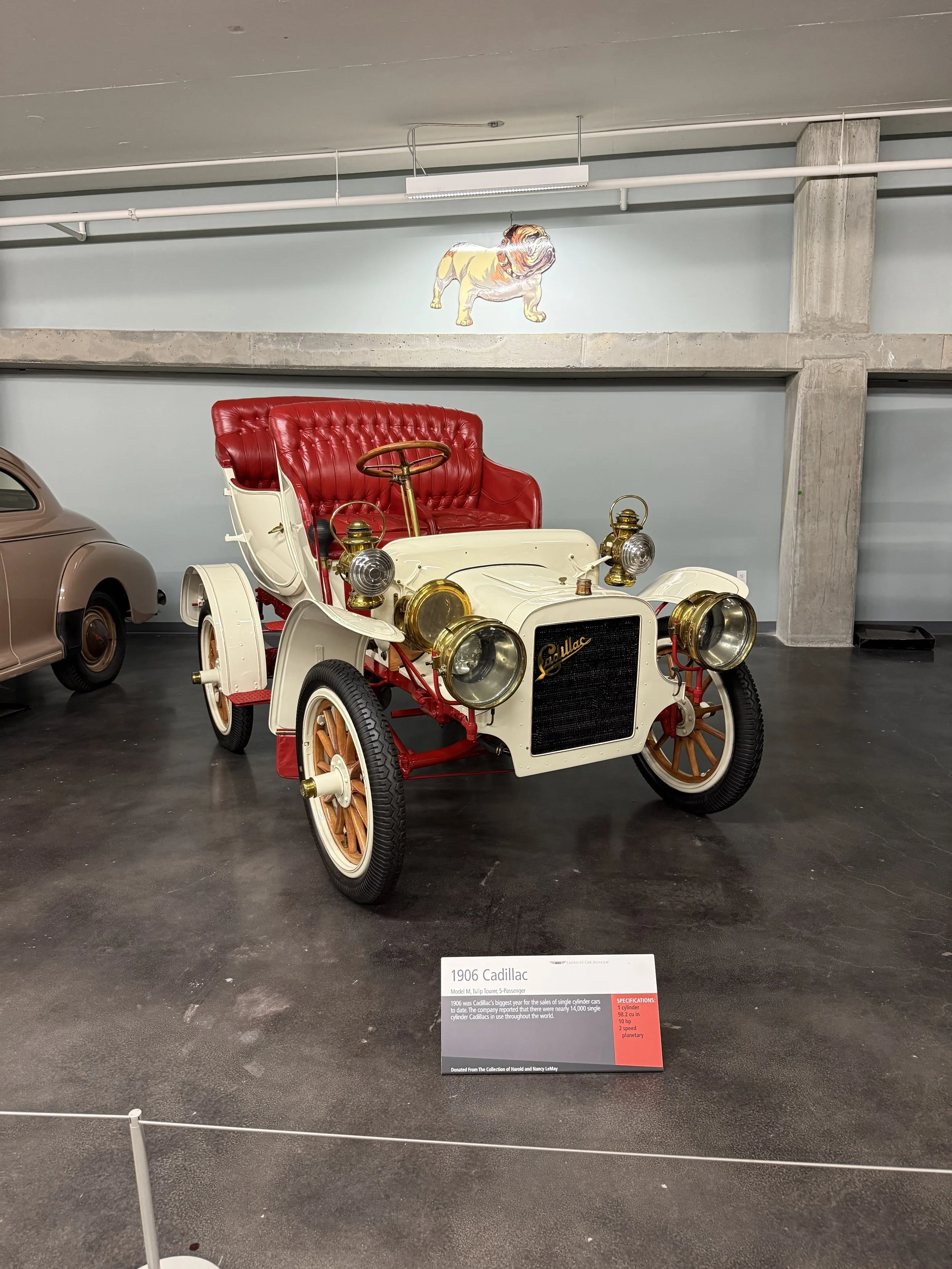
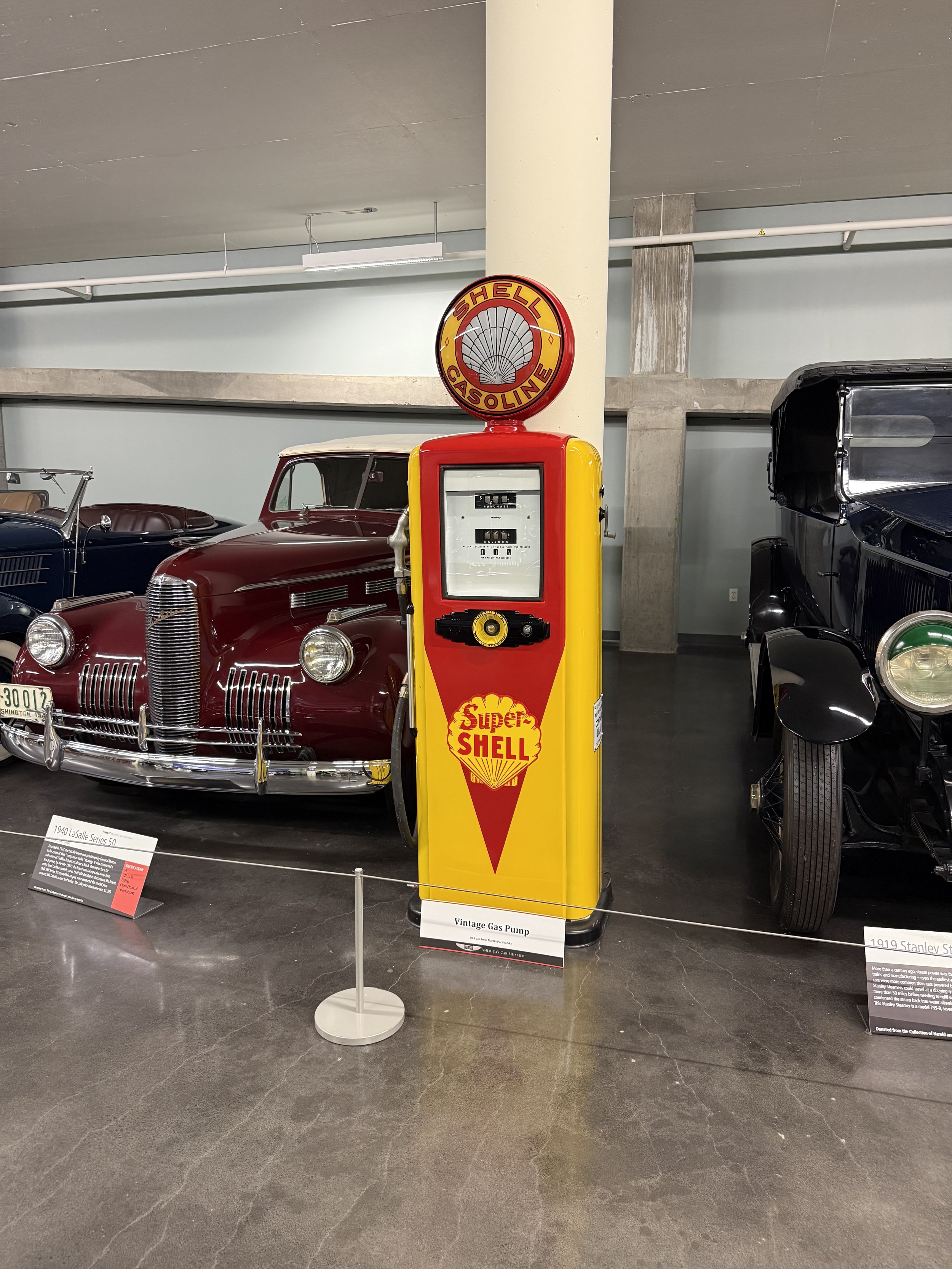
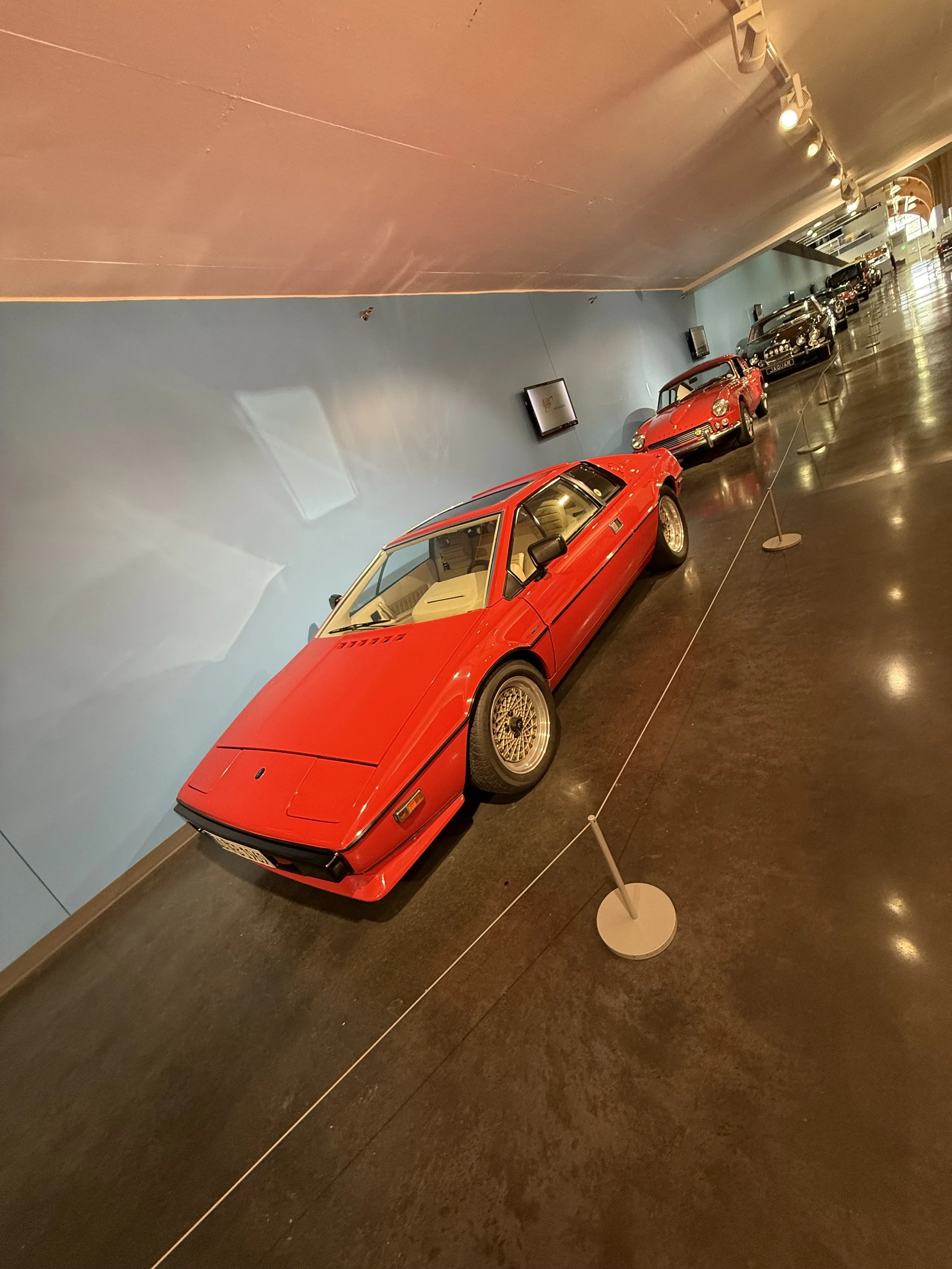
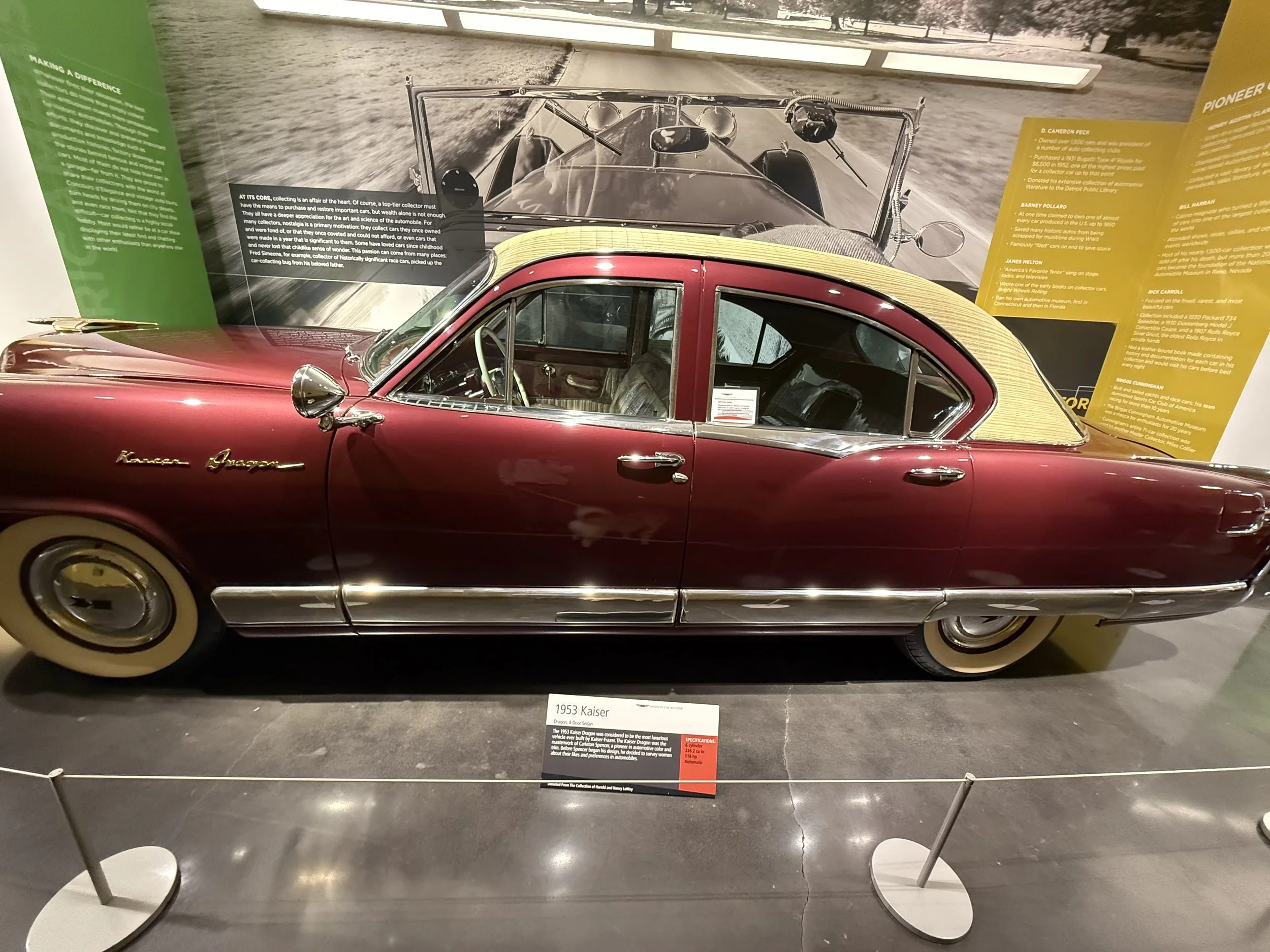
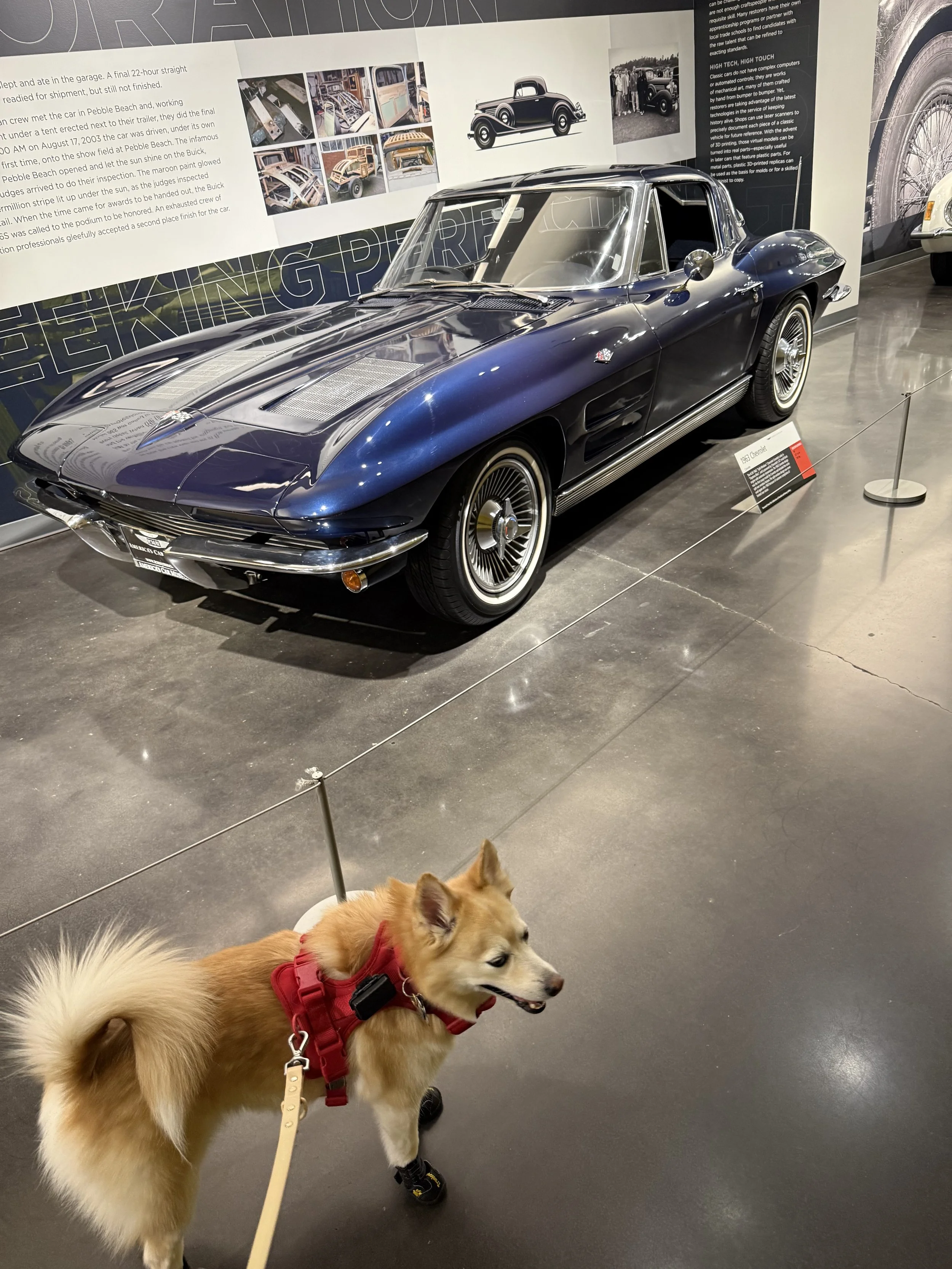
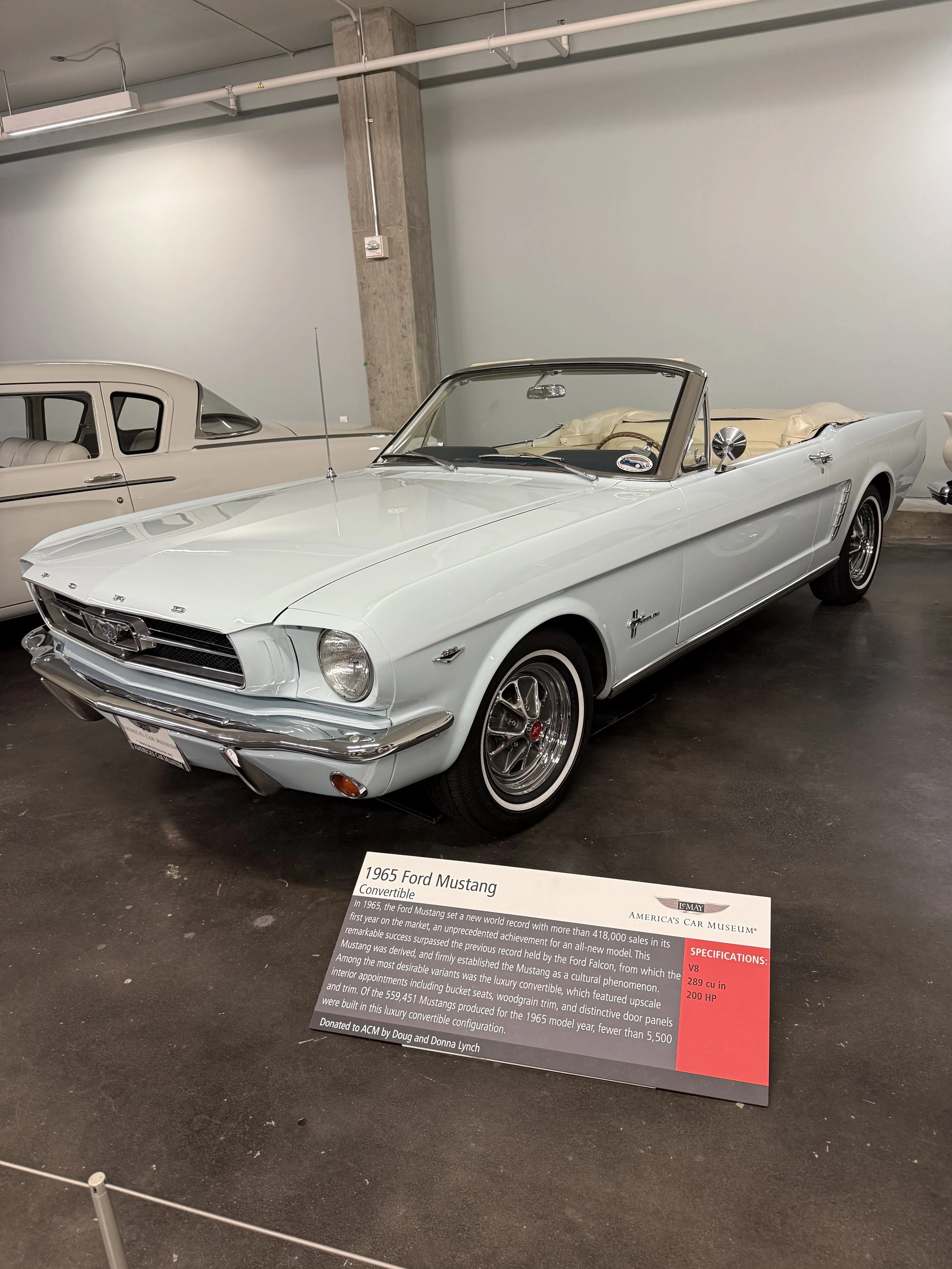
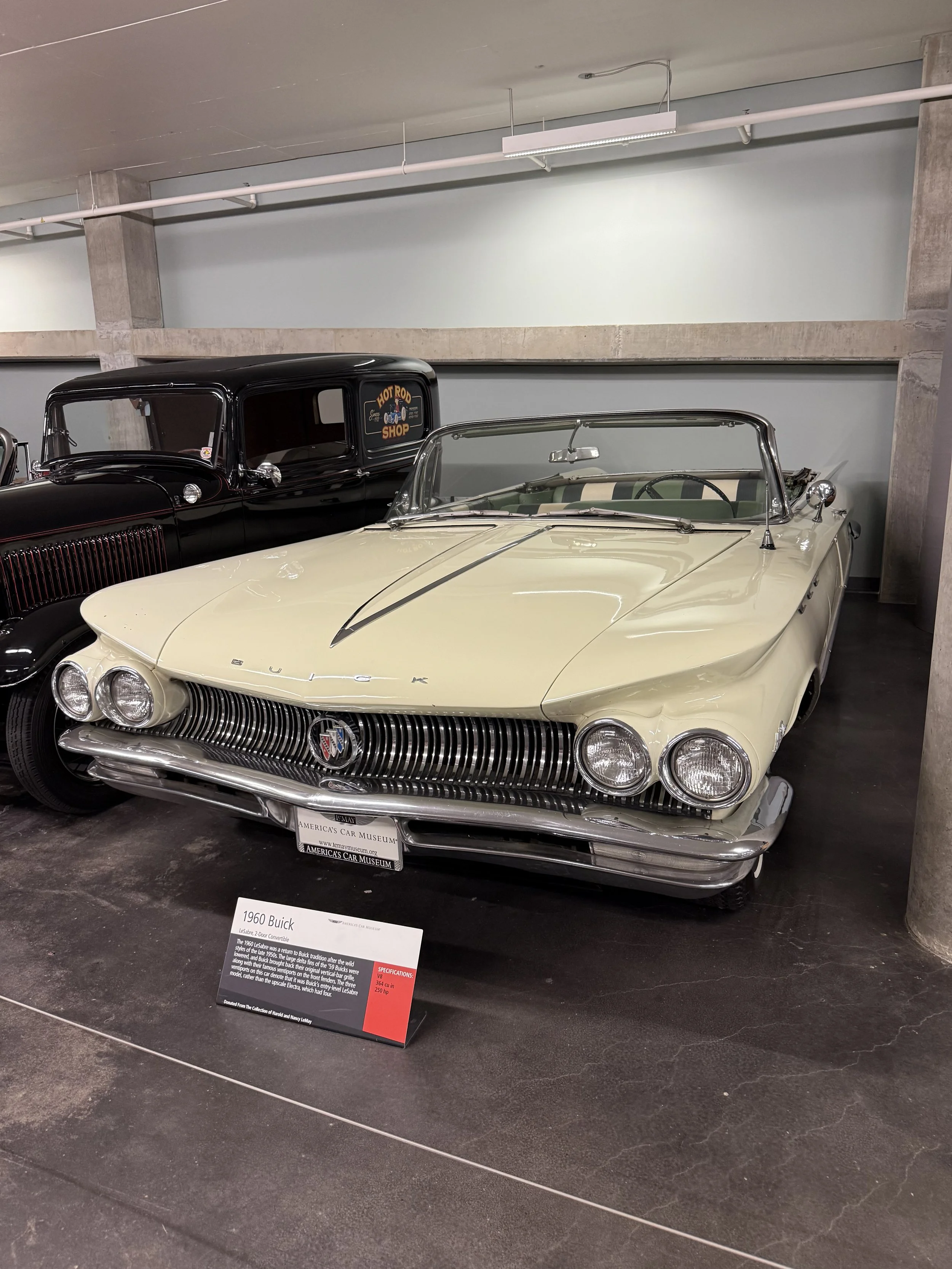
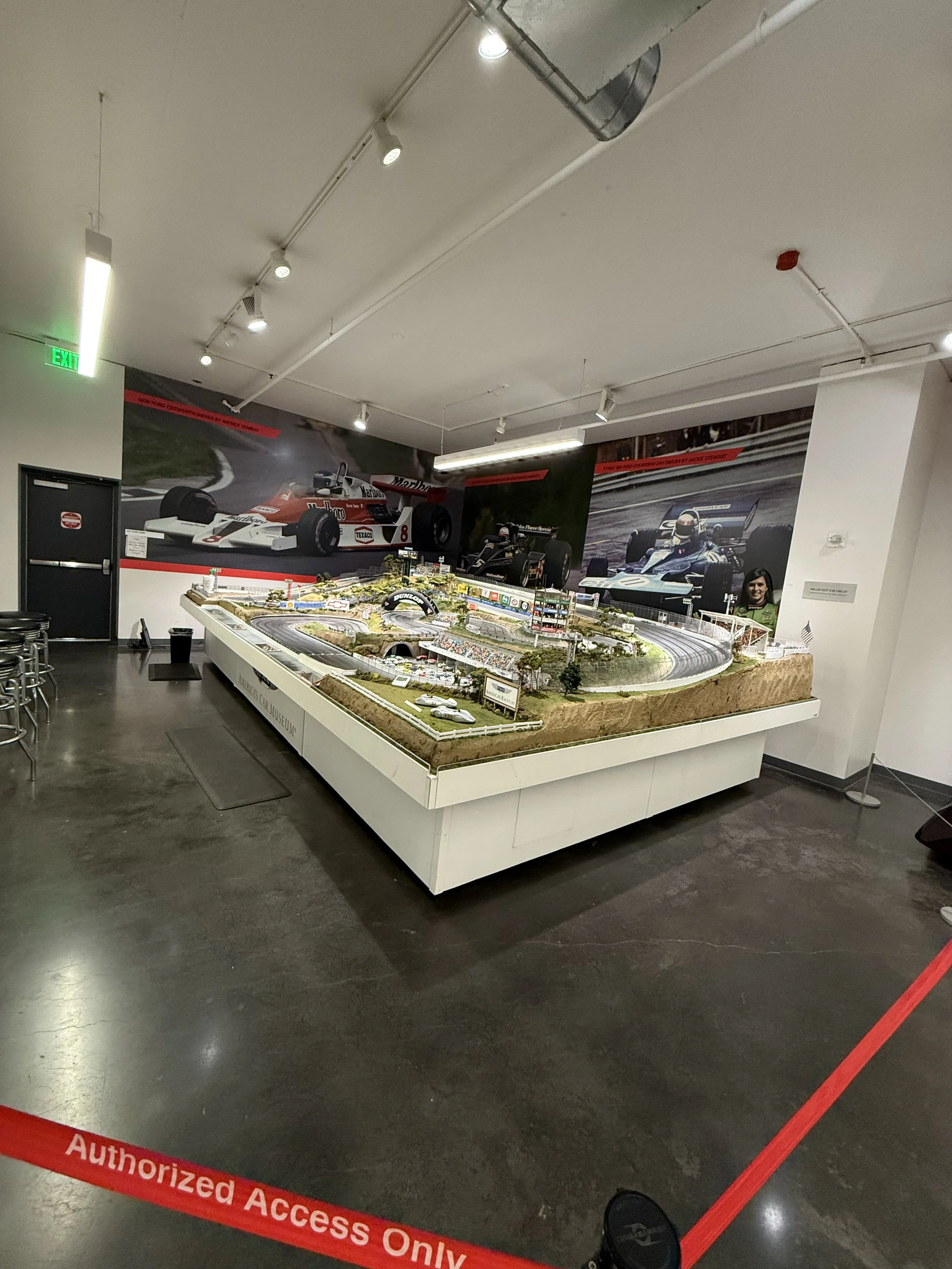
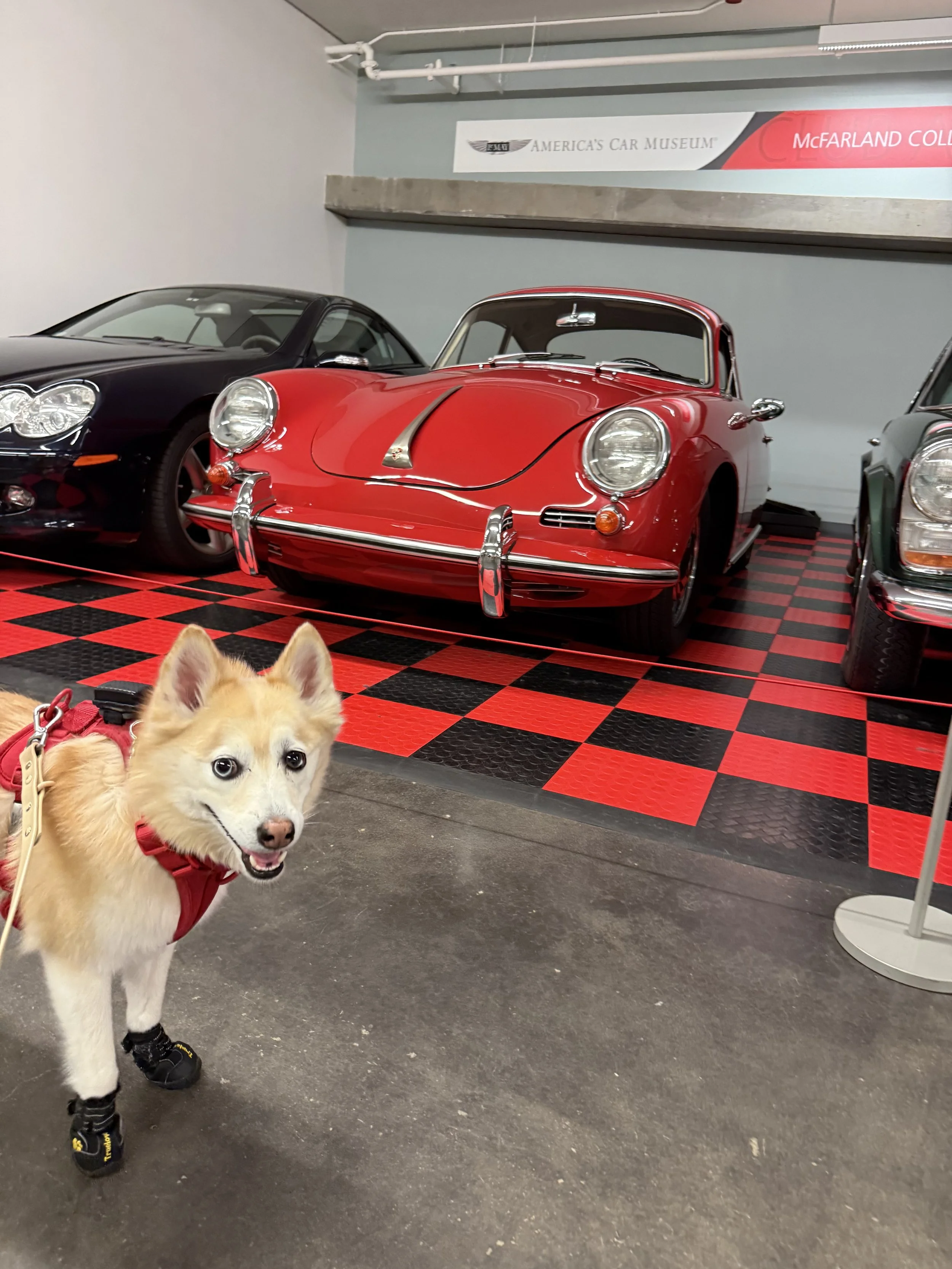
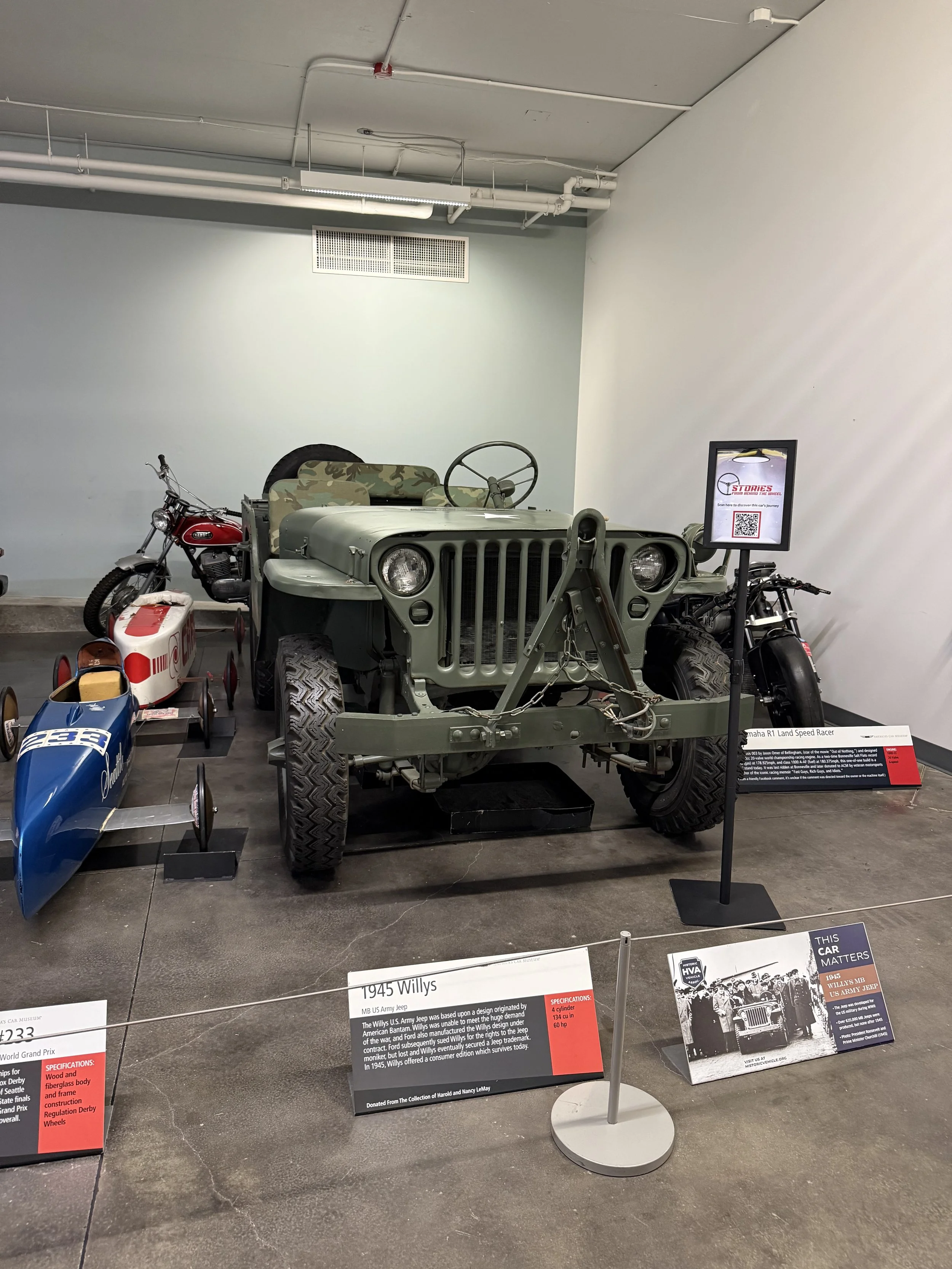
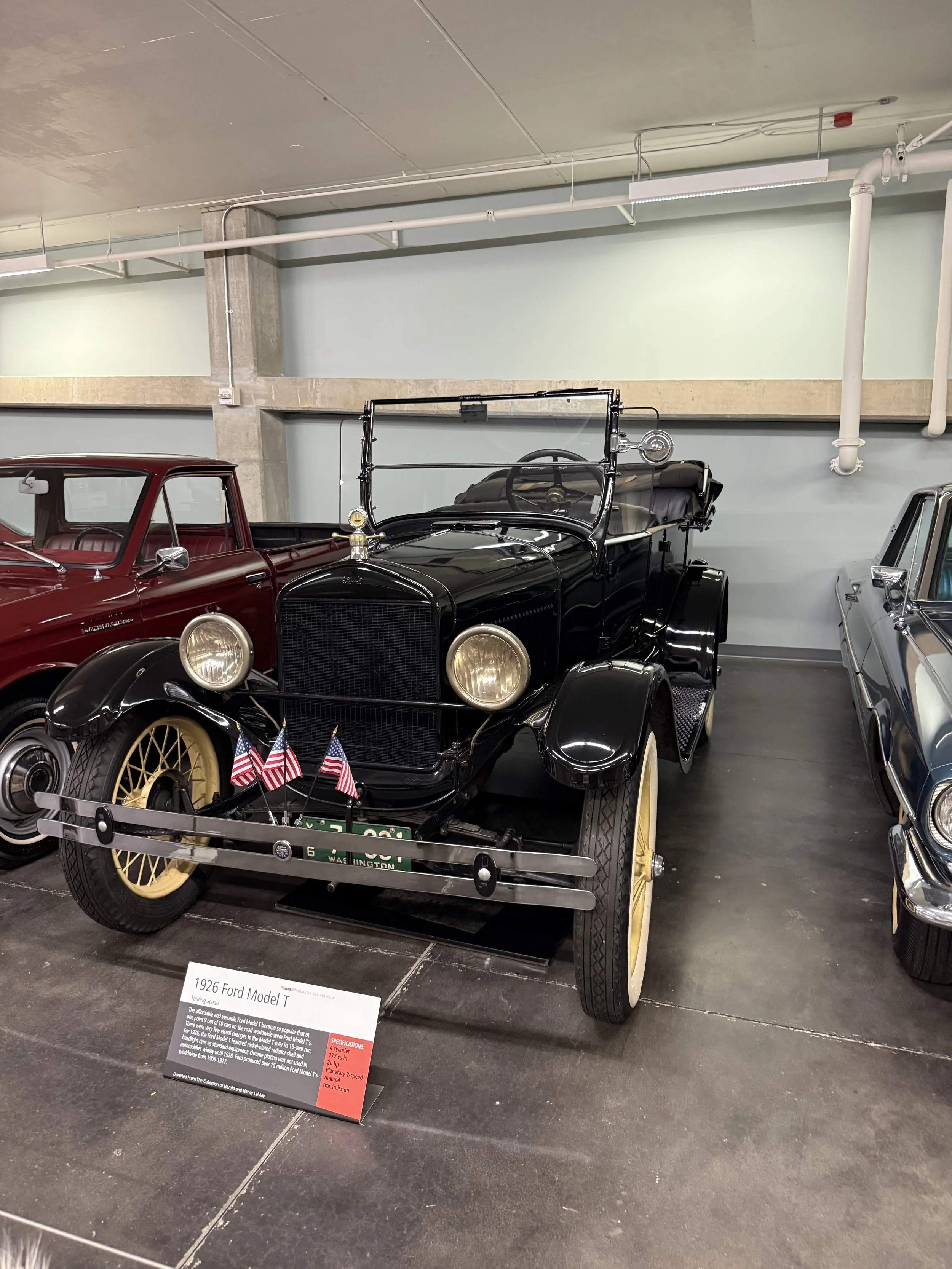
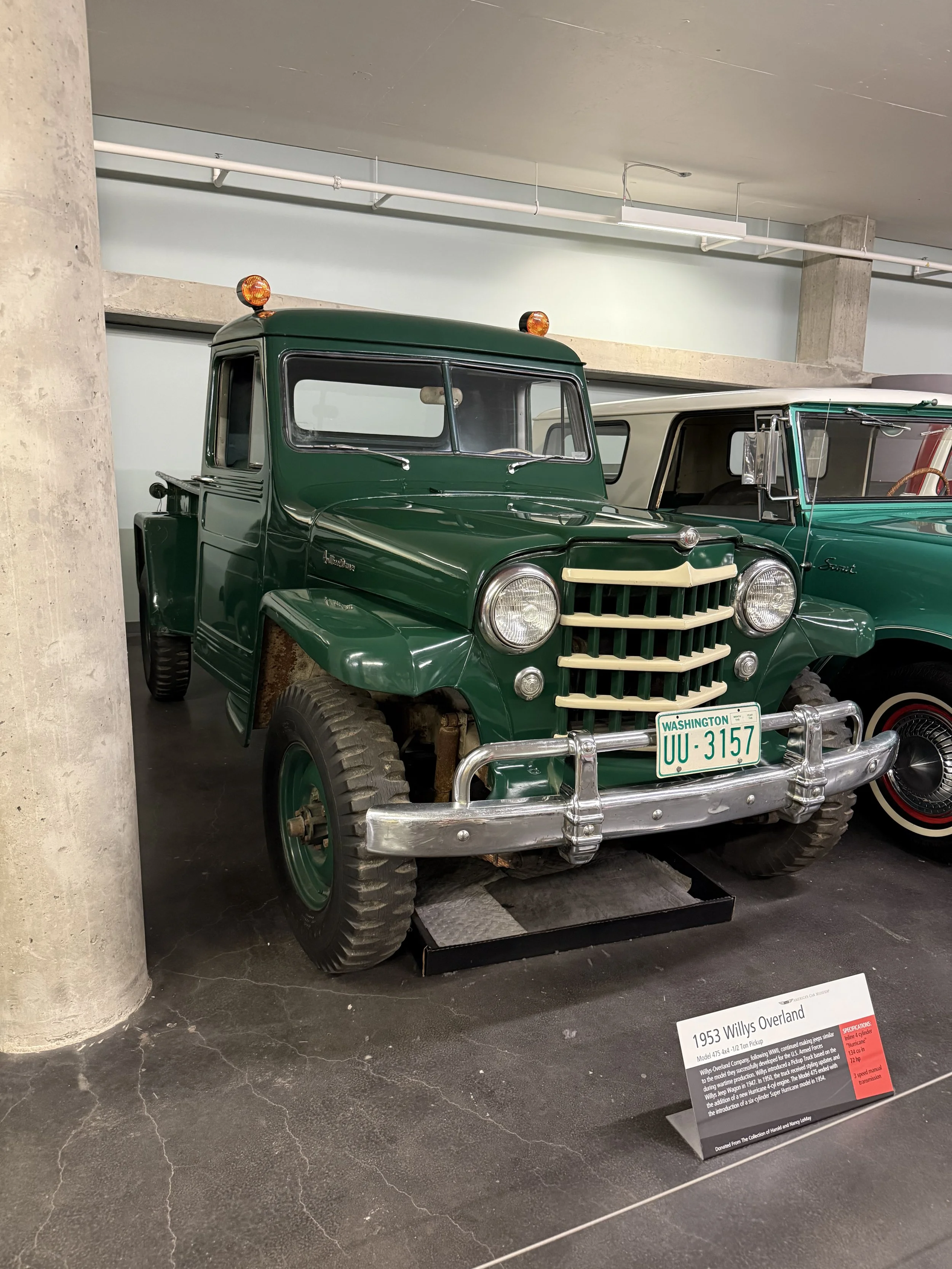
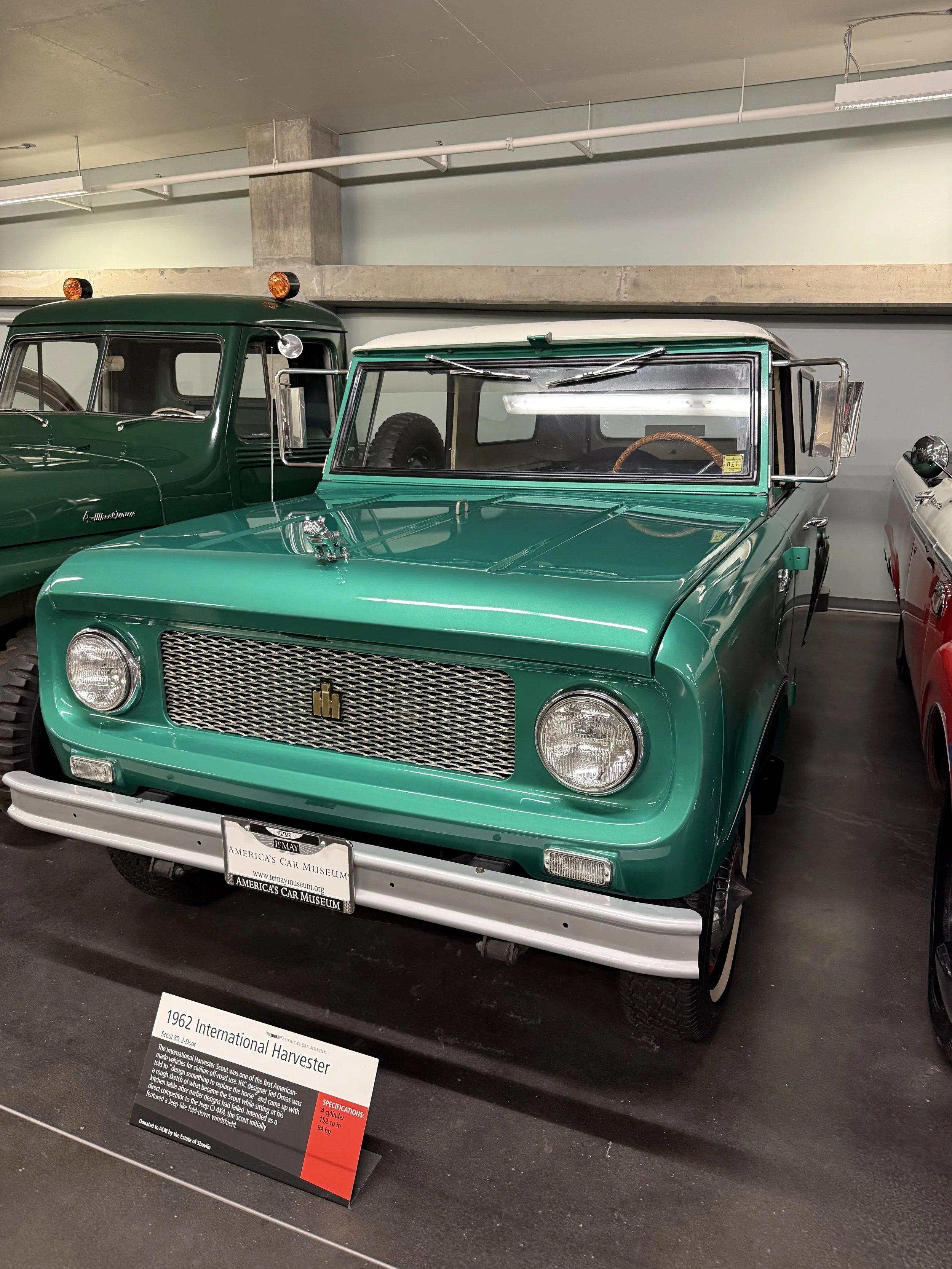
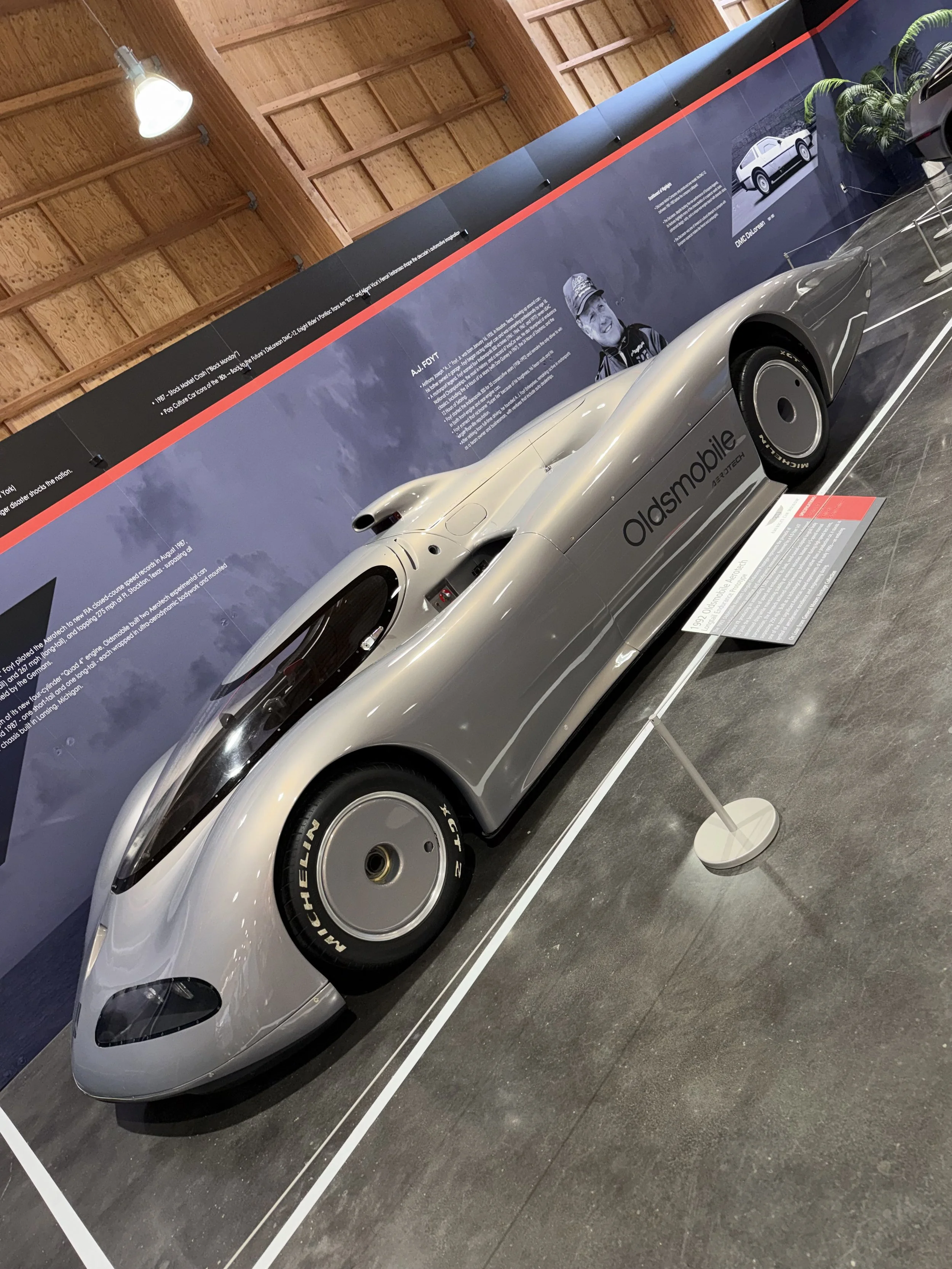
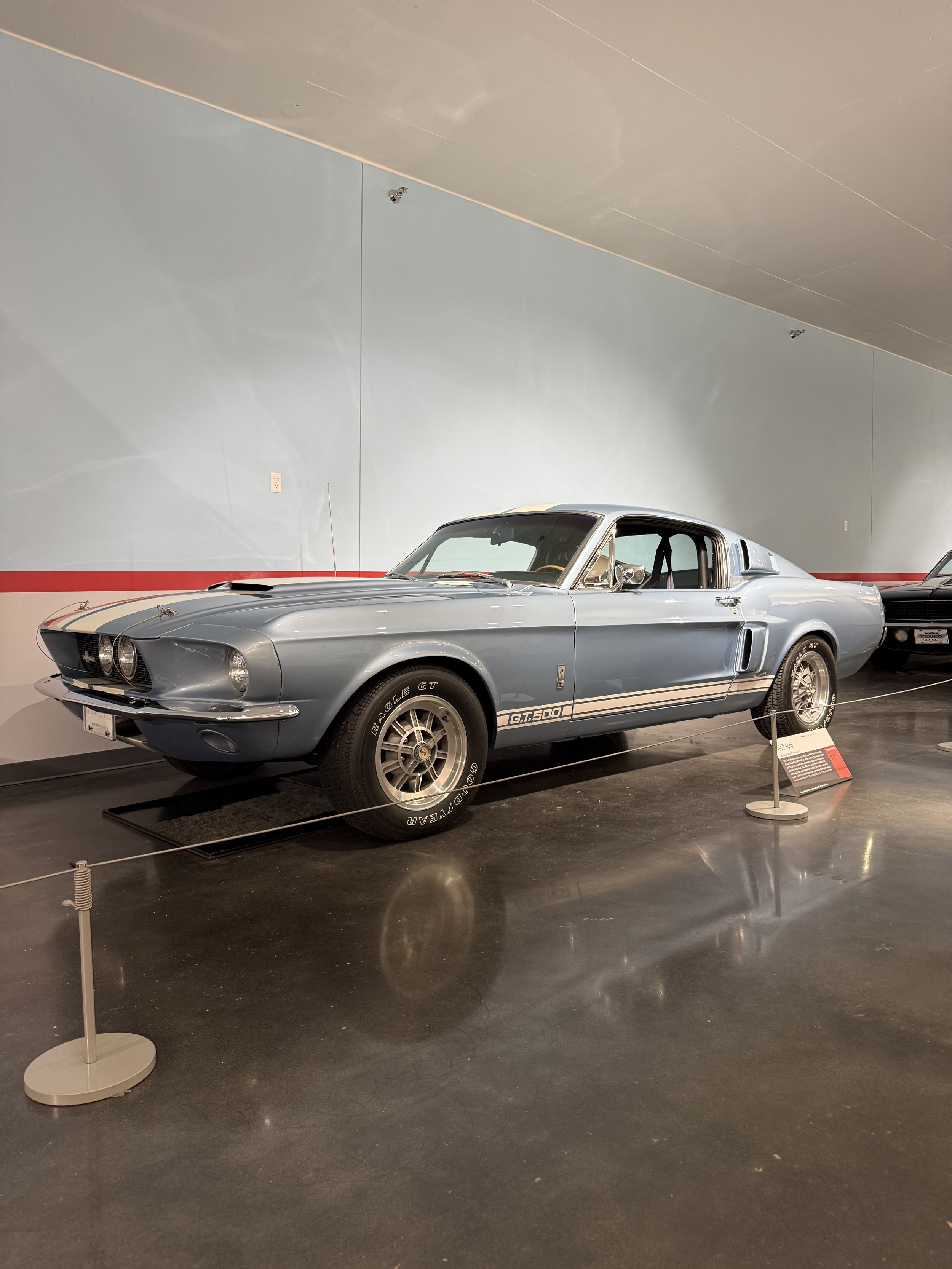
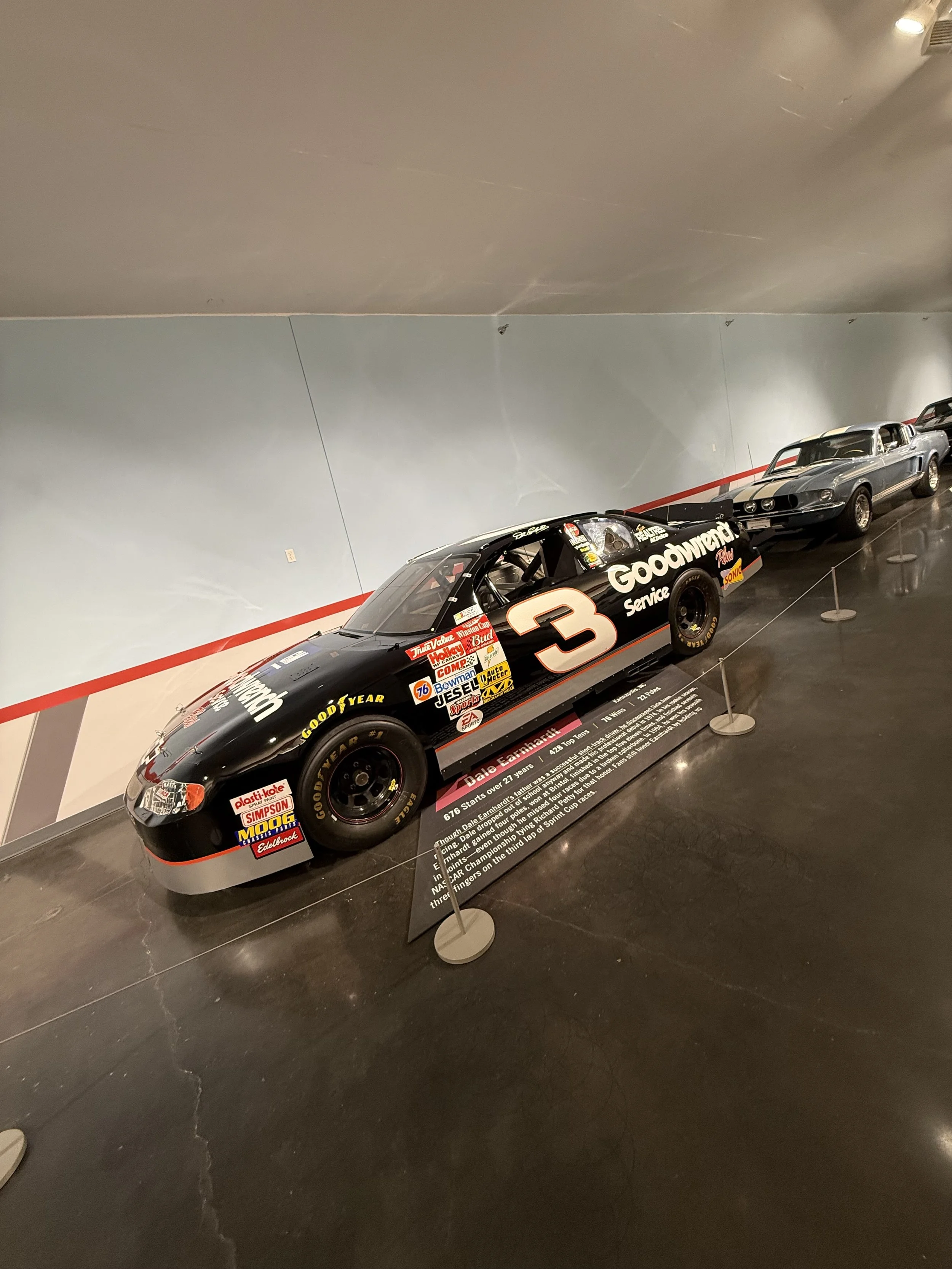
A museum visit this broad naturally leaves behind a long list of memorable machines, but a few rose clearly above the rest for us.
The Yenko Camaro
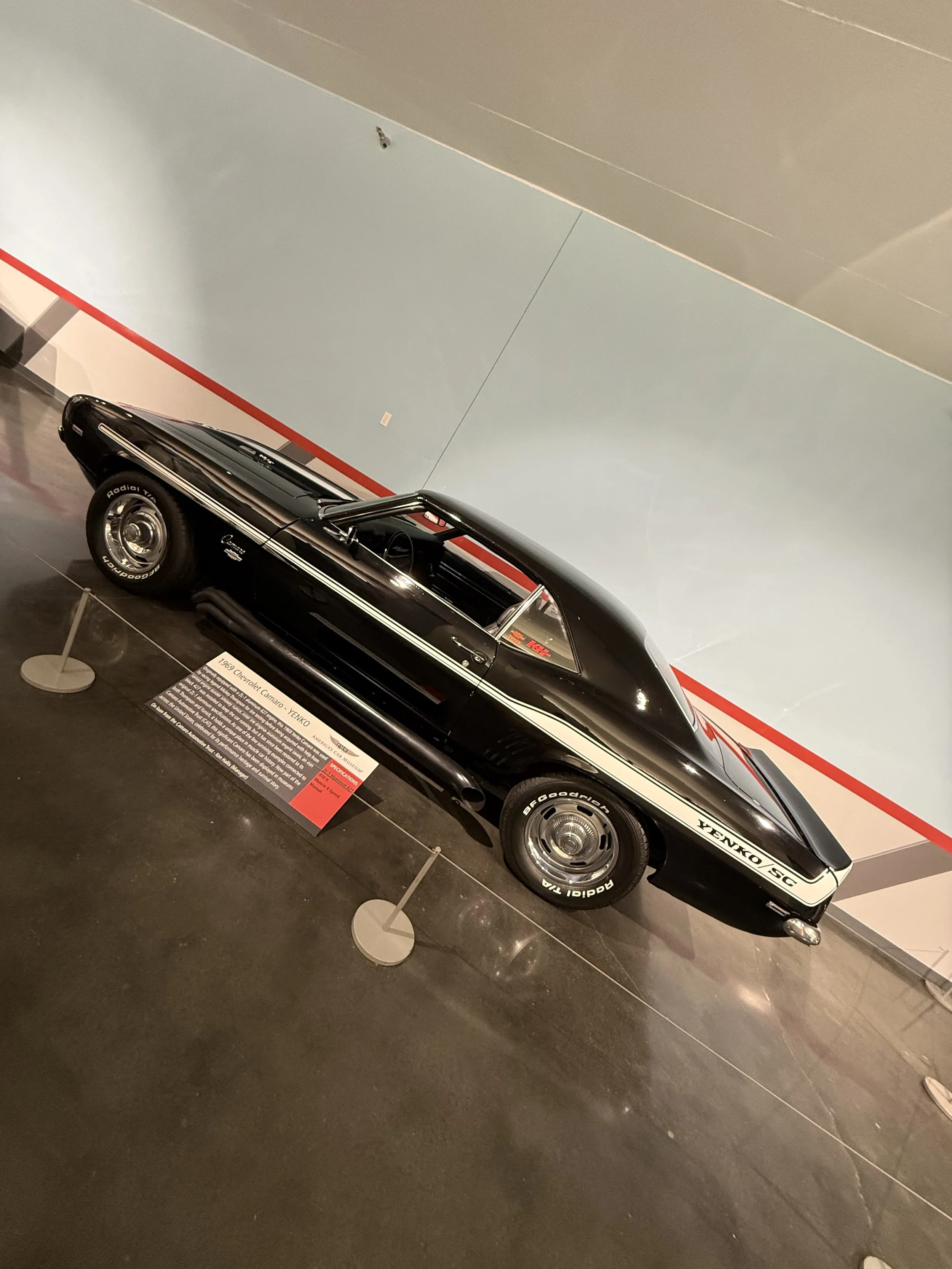
If one car captured the hard-edged side of American performance best, it was the 1969 Chevrolet Camaro Yenko.
This was not a car that relied on theater alone. It had real gravity. Black, aggressive, purposeful, and deeply mechanical in its presence, it carried the kind of seriousness that only the great American muscle cars do when they are truly right. It looked fast standing still, but more than that, it looked uncompromising.
The placard added another layer of significance, tying the car not only to the Yenko name, but to Mickey Thompson and Smokey Yunick. That gave it weight beyond styling or specification. It became not merely a great muscle car, but a specific survivor with a story rooted in the people who shaped American performance mythology in the first place.
What makes a car like this so compelling is that it embodies a particularly American confidence. Big engine. Big attitude. Minimal apology. No wasted message. The Yenko does not ask to be admired delicately. It asks to be respected.
The triple-white Thunderbird
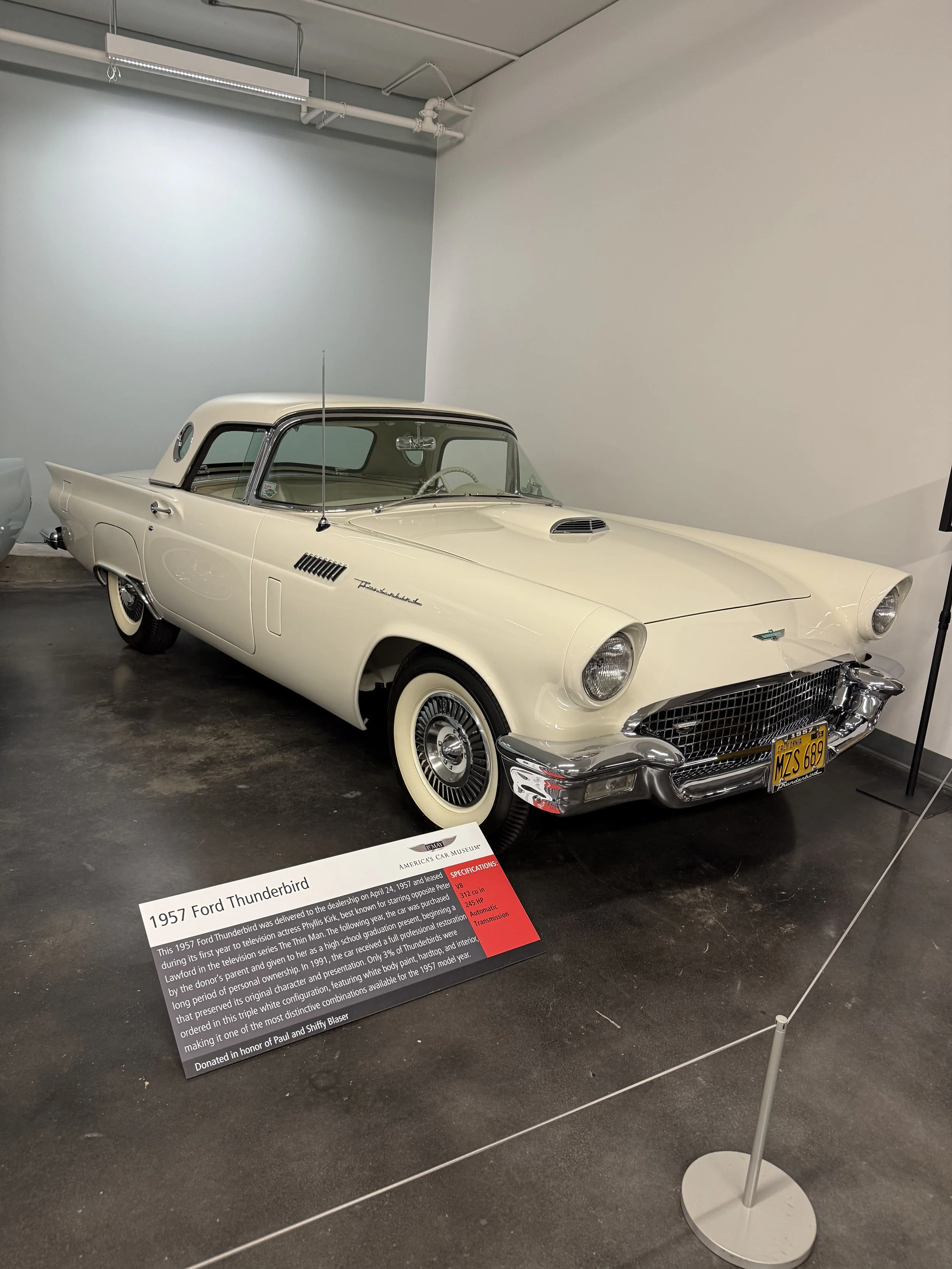
At the other end of the emotional spectrum sat the 1957 Ford Thunderbird, finished in that remarkable triple-white specification.
This car reminded us that American automotive greatness has never belonged only to the brutal or the overtly fast. Sometimes it lived in glamour, proportion, optimism, and presentation. This Thunderbird was a perfect example of that. It had elegance, but it also had ease. It felt like a car designed for the aspirational side of postwar America, where style and freedom mattered just as much as performance figures.
The all-white treatment gave it an especially striking presence. White body, white roof, white interior — the kind of specification that can only work when the lines of the car are strong enough to carry it. This one did. It looked light, confident, and immaculately composed. The brightwork, the stance, the wheel treatment, the way the hardtop sat over the body — everything about it felt resolved.
What stayed with us was how perfectly it expressed one of the museum’s larger strengths: showing that American cars were not only powerful, but also deeply fluent in desire. The Thunderbird sold style, status, leisure, and self-image just as much as transportation. Seeing one preserved like this made that crystal clear.
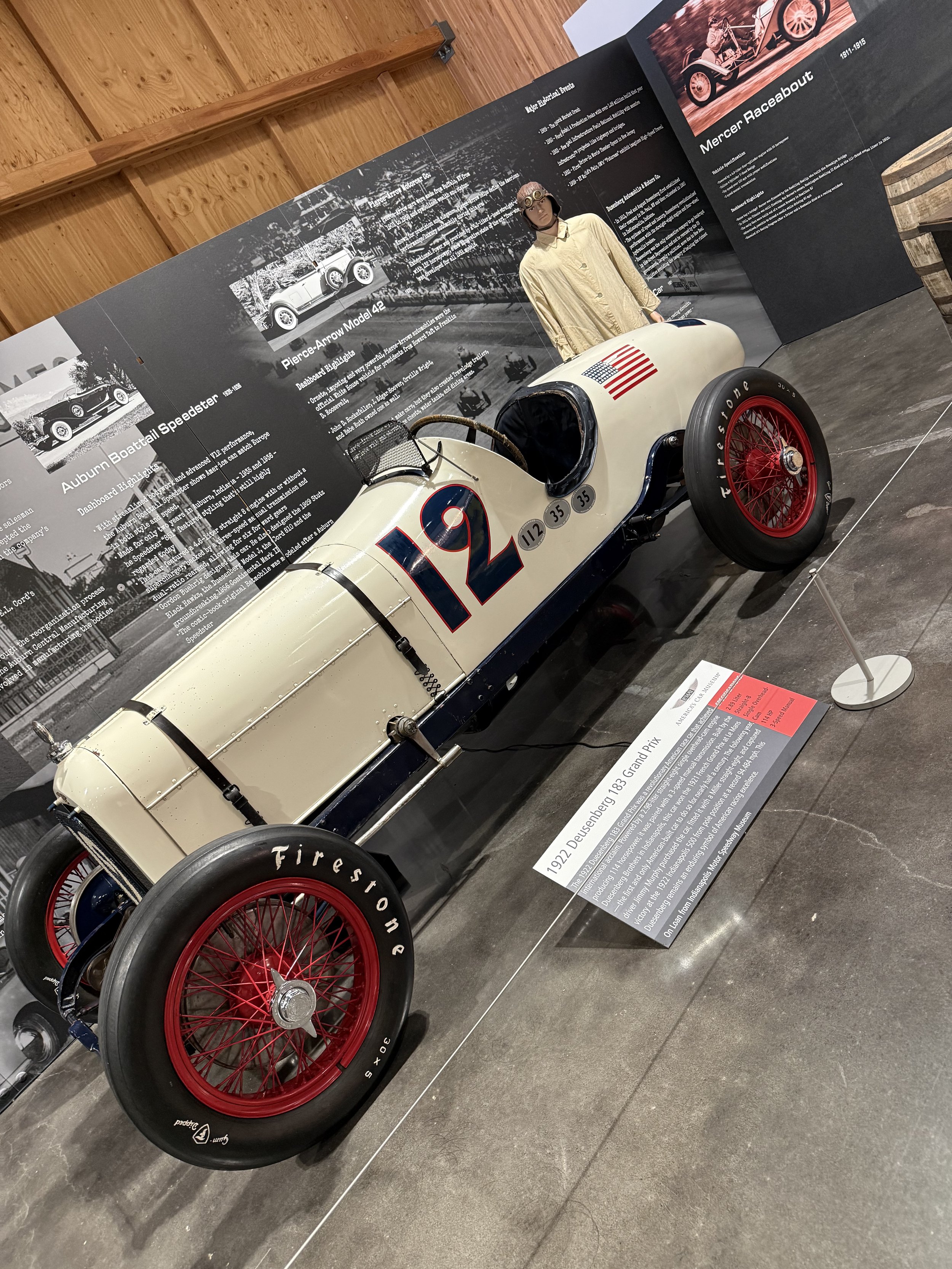
The 1922 Duesenberg 183 Grand Prix
Our third favorite was the 1922 Duesenberg 183 Grand Prix, and in many ways it may have been the most historically affecting car we saw all day.
This was early competition in its rawest and most revealing form. Narrow body, exposed mechanical honesty, no excess, no insulation from risk. Looking at it, you do not just see a race car. You see a period when speed itself was still being defined. You see ingenuity without polish, courage without protection, and a very early version of the competitive instinct that would go on to shape so much of the automotive world.
What makes a machine like this so powerful in person is that it strips racing back to essentials. Before the modern layers of technology, spectacle, and corporate scale, there were cars like this, built around a direct relationship between engineering and bravery. That relationship is part of what gave the automobile its mystique in the first place.
The Duesenberg did not need visual flamboyance to dominate its section. Its significance did the work.
Other standouts
Beyond our top three, the museum was full of cars and exhibits that lingered.
The split-window 1963 Corvette was one of them, and not just because it is an icon. In person, the split rear treatment gives the car a sense of event. It feels like a turning point car — one that understood it was not simply transportation, but an object of style and identity. The fact that the feature lasted only for that one model year makes it even more compelling.
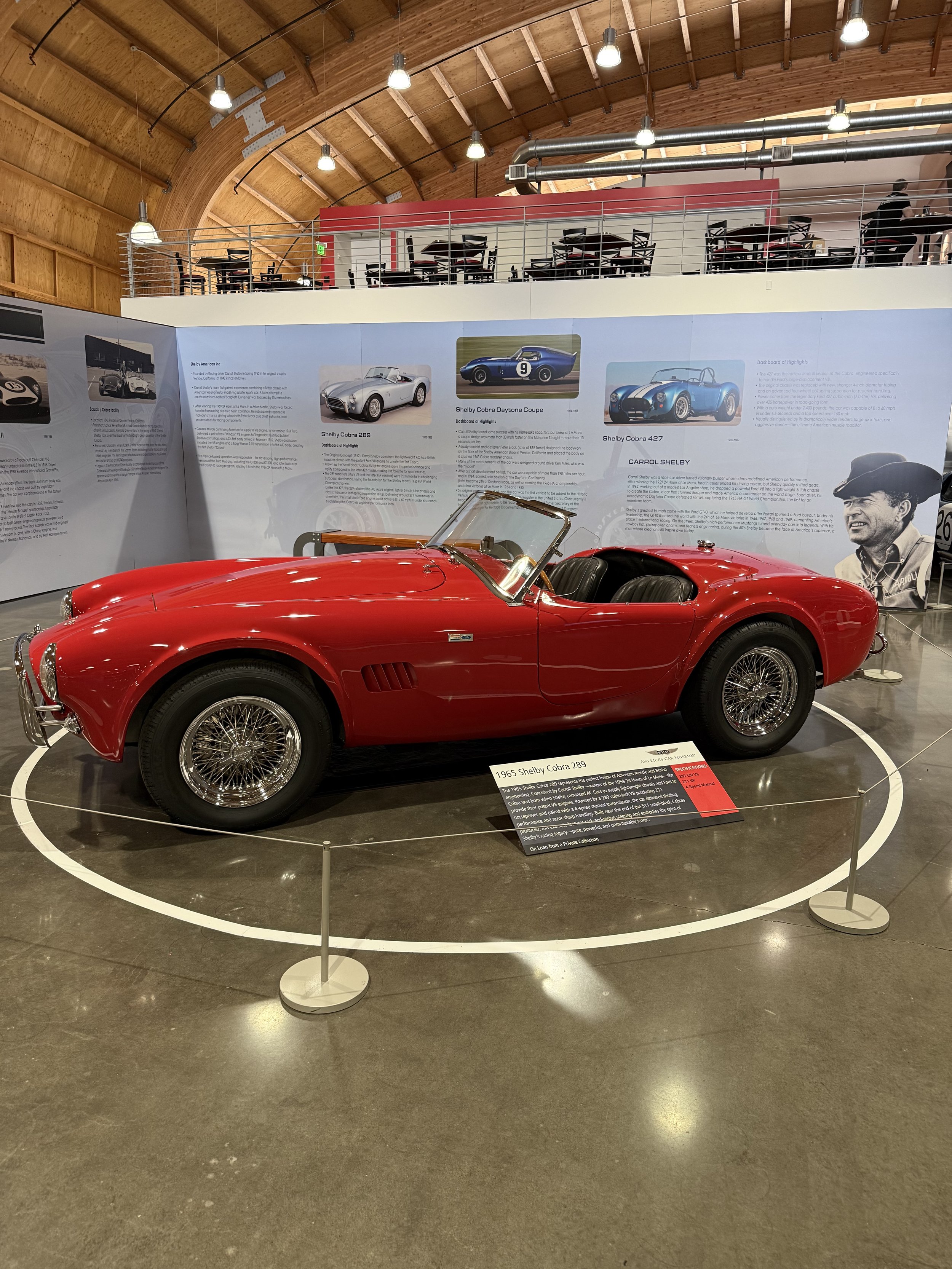
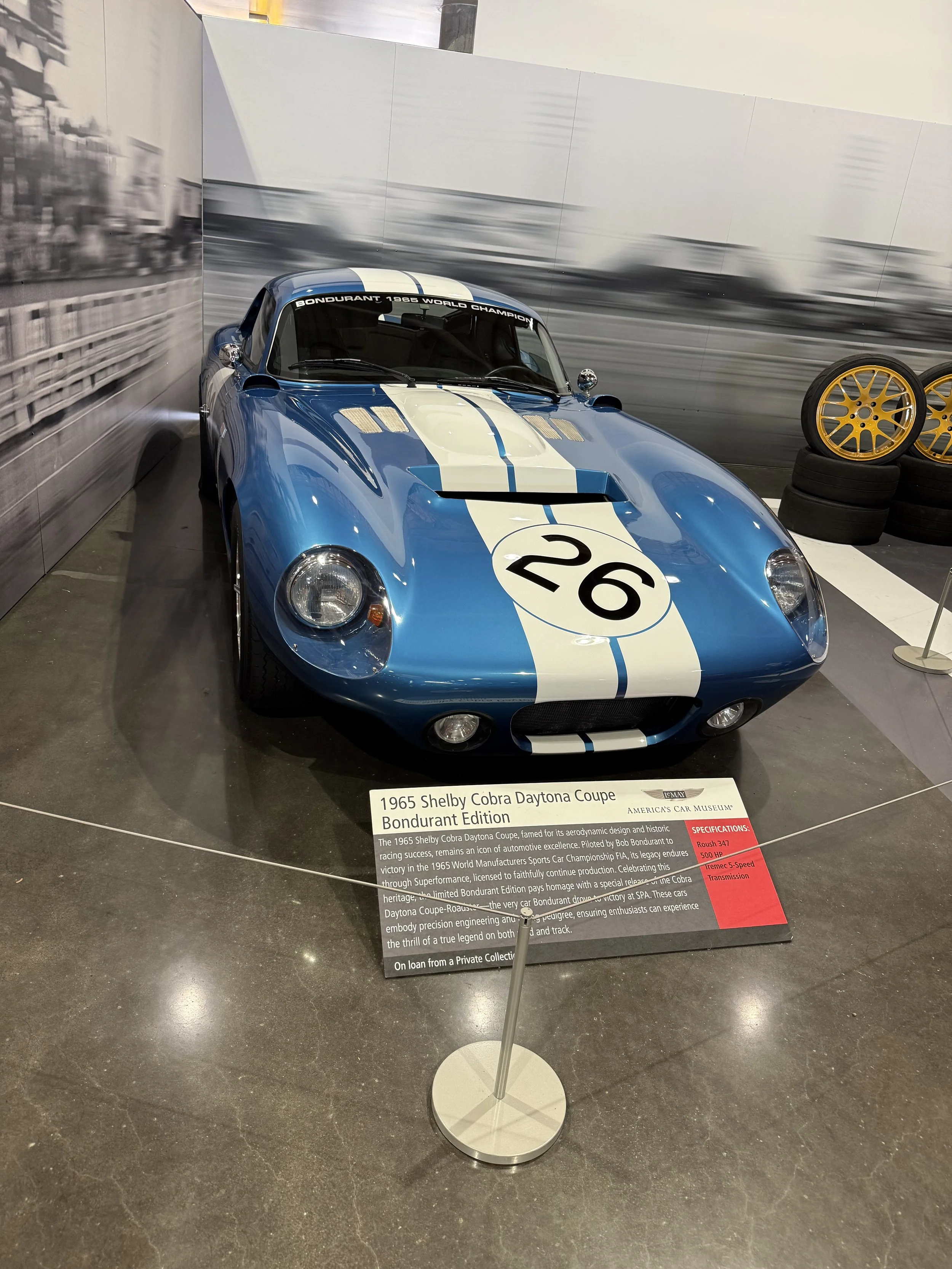
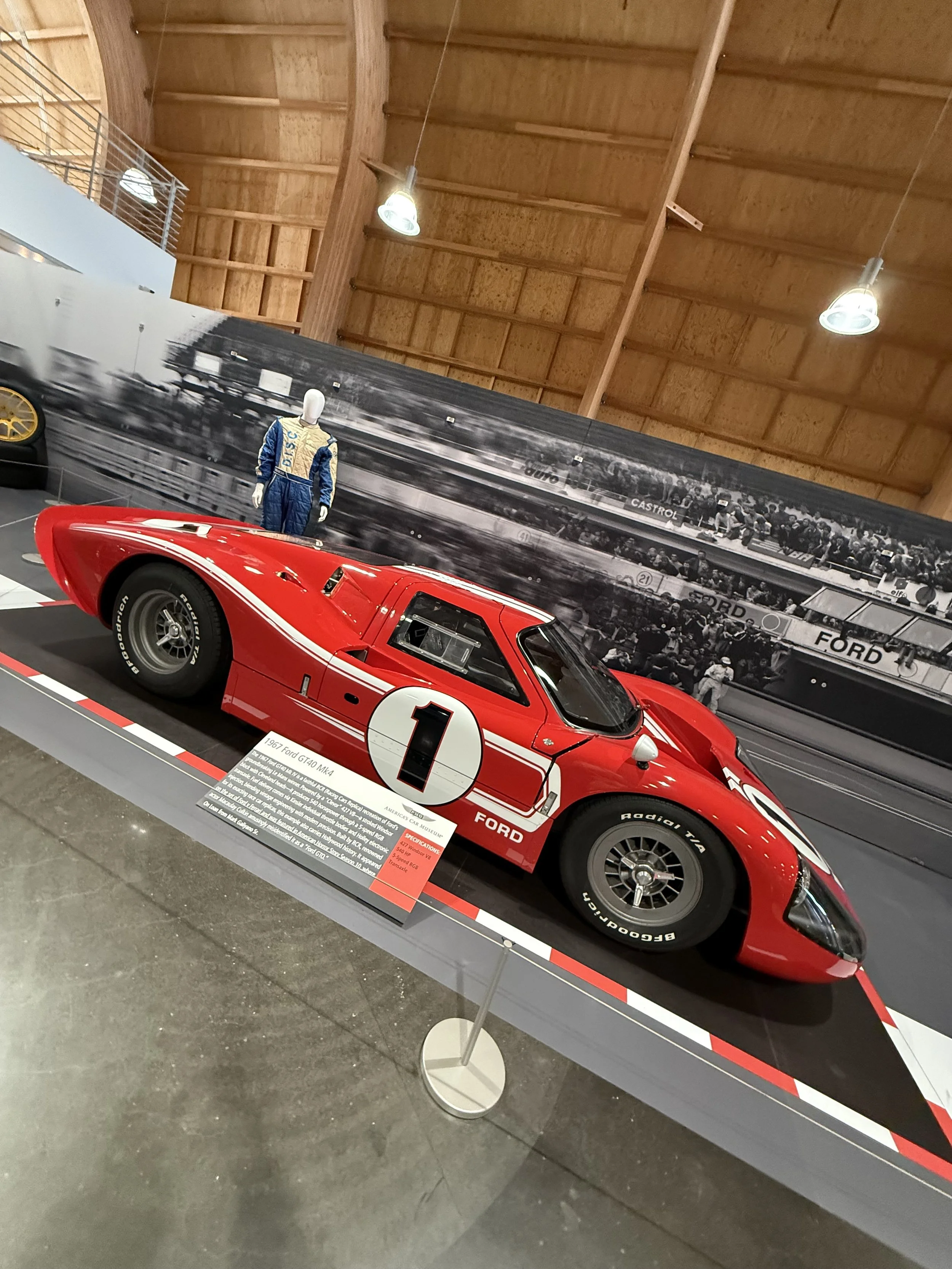
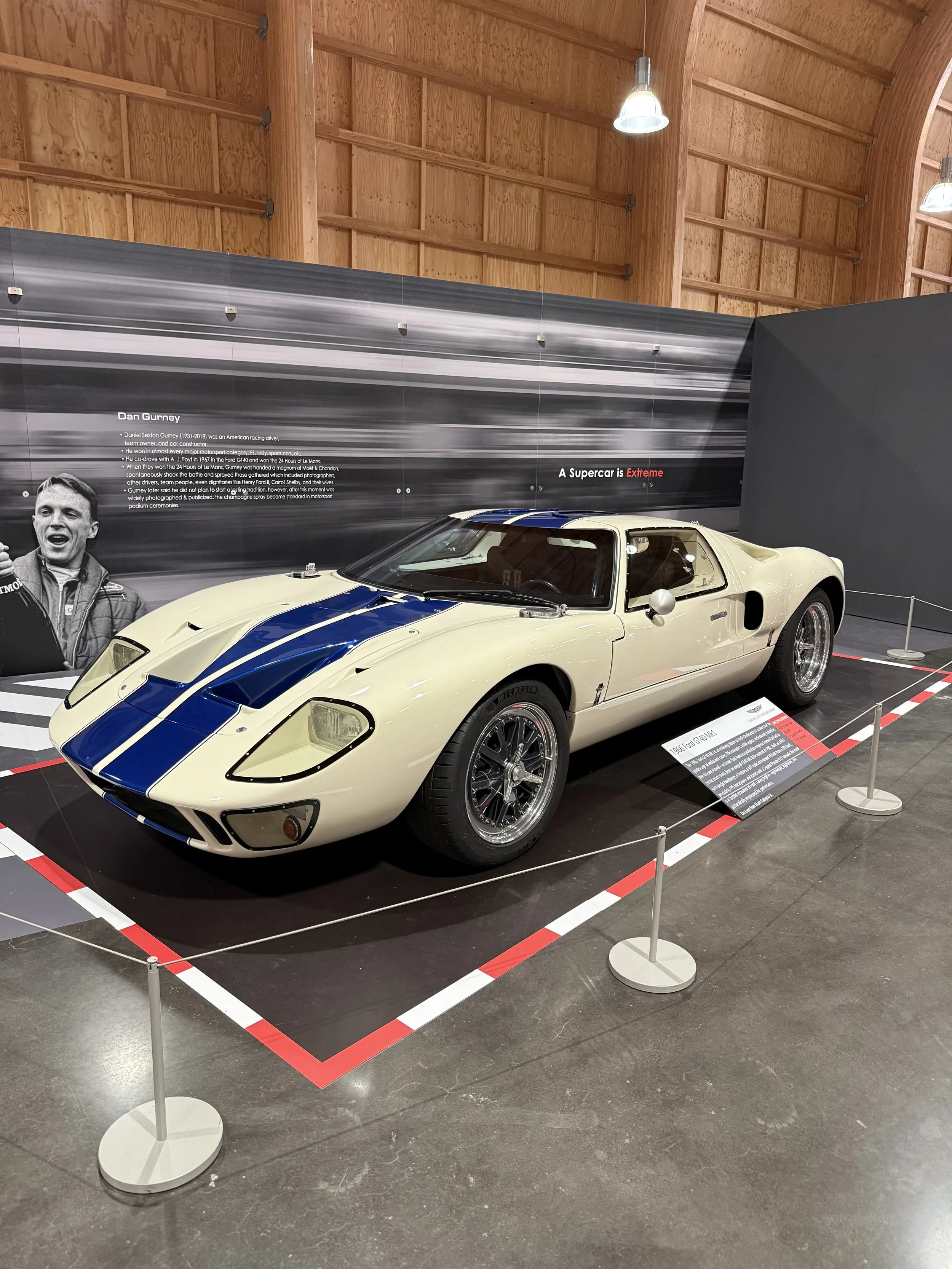
The Shelby and Cobra replica material was another high point, especially in the way it showed American performance maturing from brute force into more refined and internationally capable forms. The Ford GT40, the Daytona Coupe, and the broader Shelby context gave the museum a proper competition spine.
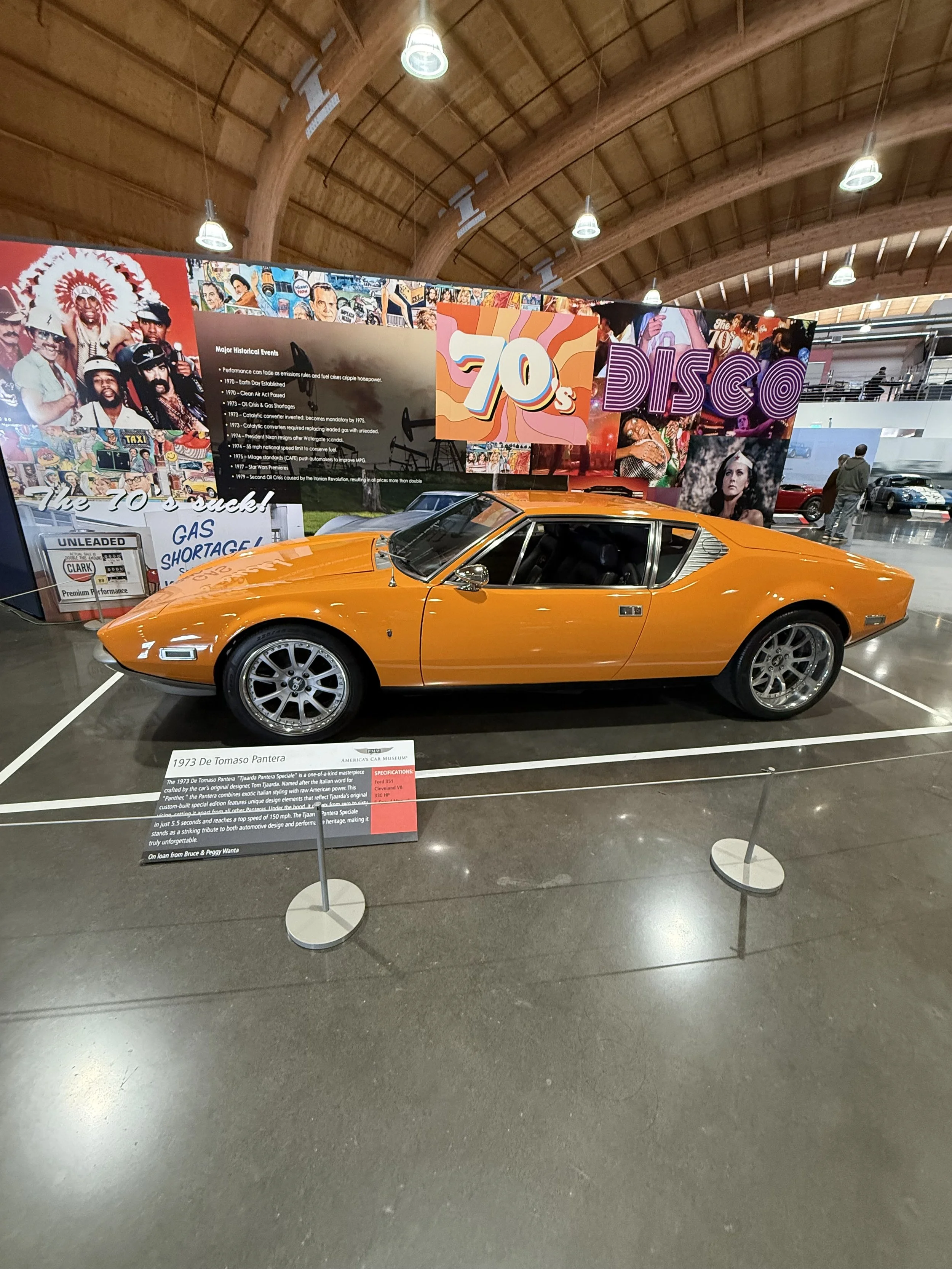
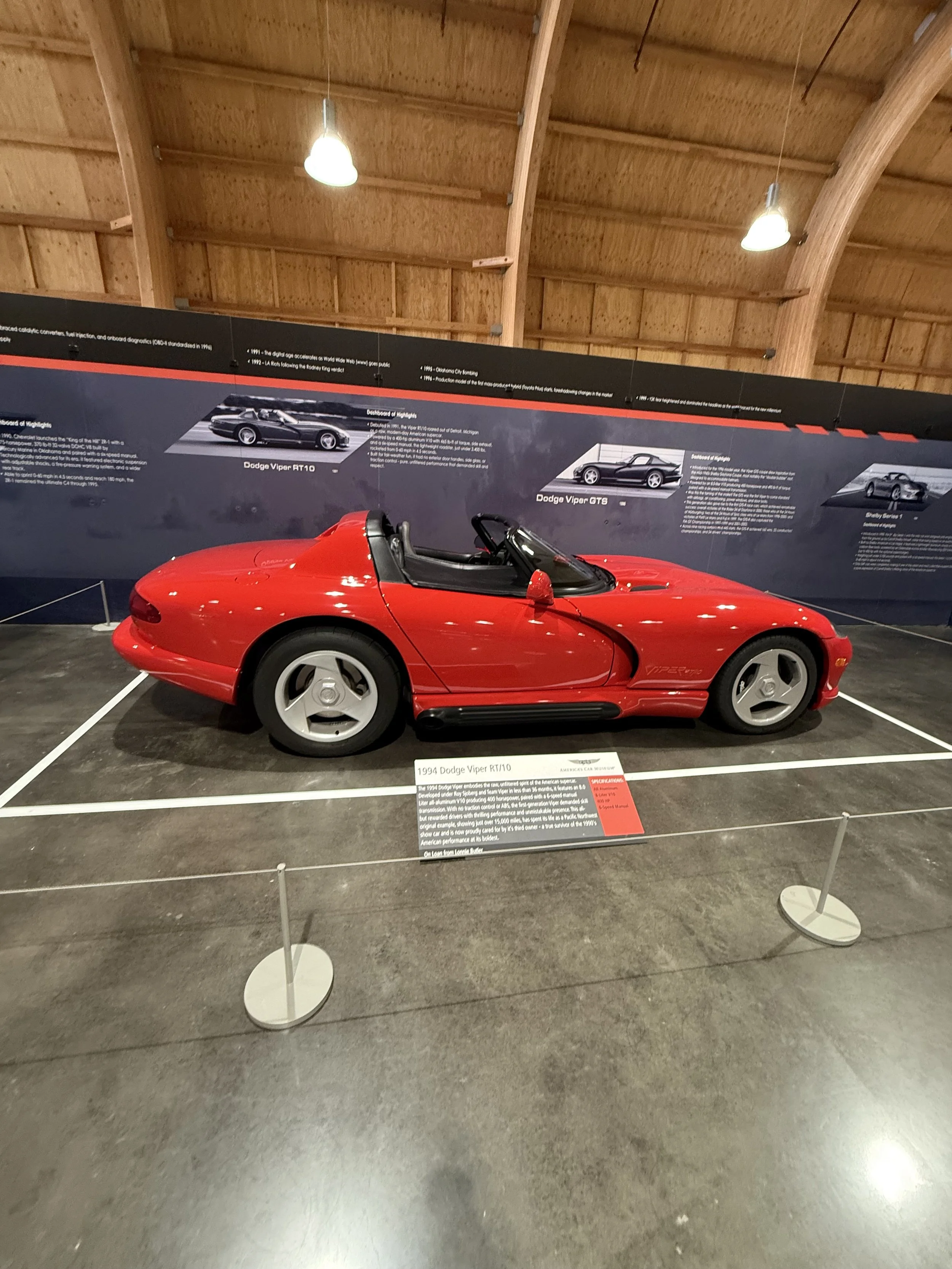
The De Tomaso Pantera and Dodge Viper RT/10 helped reinforce something else the museum does well: it treats American performance not as a single era, but as an evolving language. Front-engine, mid-engine, elegant, brutal, hybridized, coachbuilt, production-based, race-derived — it is all there.
Even the more unexpected exhibits mattered. The income-versus-car-price display from the early 1930s, for example, was useful because it reminded visitors that these machines did not exist in abstraction. Cars have always lived inside wider economic, social, and cultural realities.
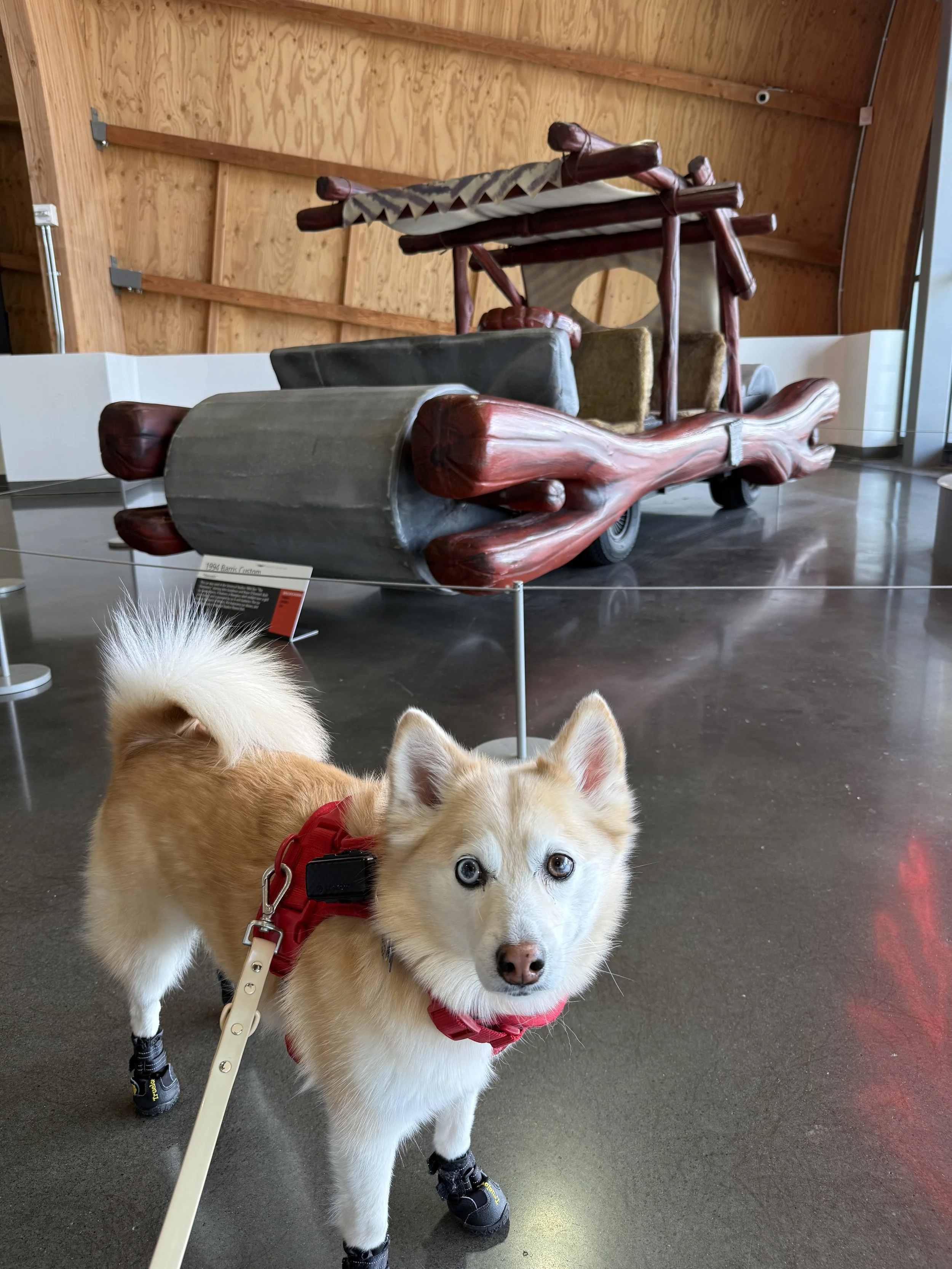
Gatsby’s favorite: the Flintmobile
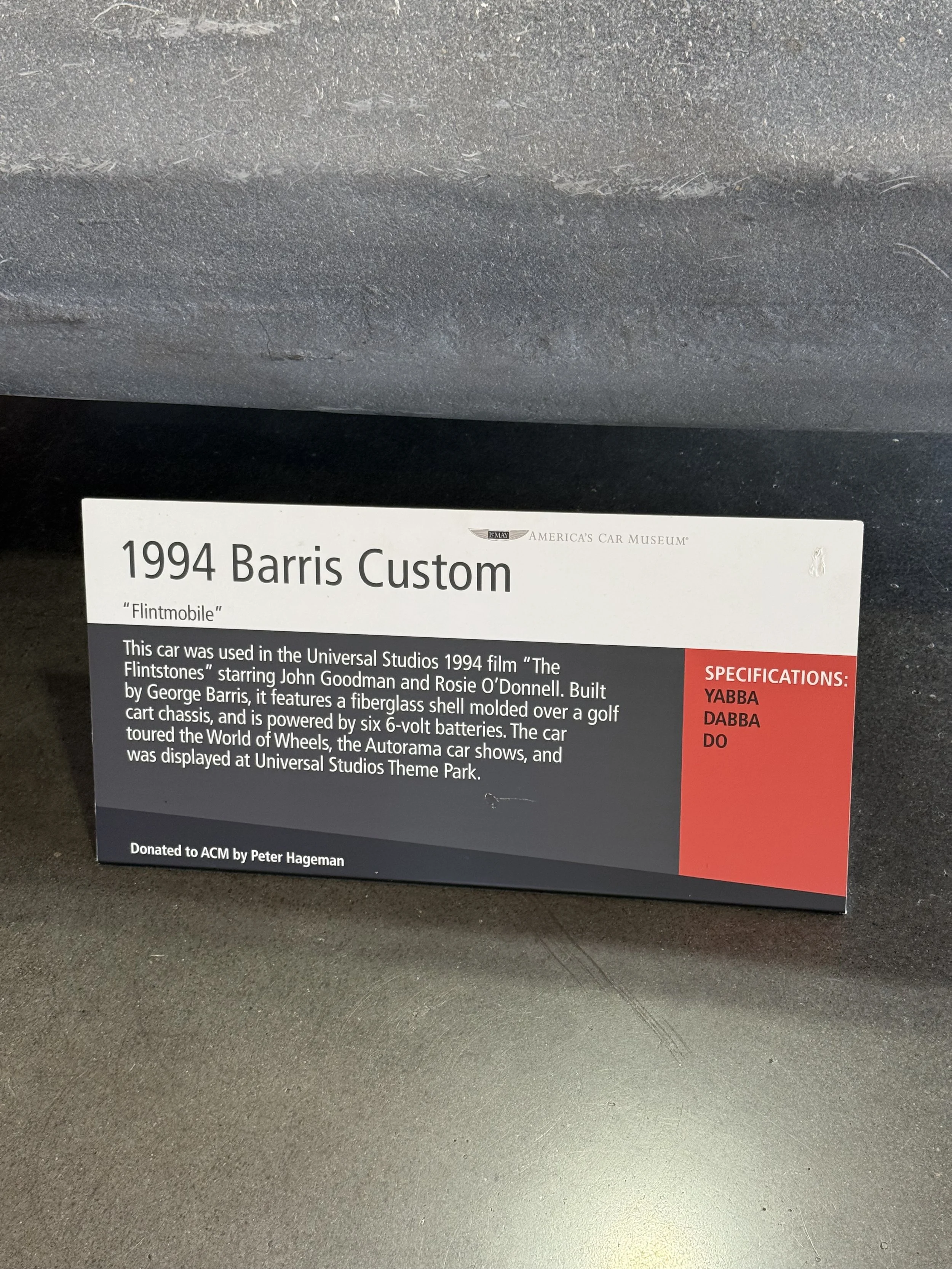
If our own favorites were rooted in competition history, design, and American performance, Gatsby’s clear winner was the 1994 Barris Custom Flintmobile.
And honestly, that felt exactly right.
Every serious collection needs moments that widen the emotional register. A museum cannot be all reverence, all pedigree, all chronology. It also needs surprise, humor, theatricality, and a reminder that the automobile has played a role in imagination just as much as industry. The Flintmobile delivered all of that immediately.
George Barris occupies a singular place in American car culture because he understood that cars could become characters. Not just customized machines, but objects of fantasy, television, film, and cultural memory. The Flintmobile is absurd, of course, but it is intentionally absurd. That is why it works. It belongs to a lineage of American automotive creativity that values spectacle, storytelling, and visual wit.
Seeing it in person was a reminder that car history is not only about engineering milestones or production significance. It is also about the machines that captured public imagination. The Flintmobile may be playful, but it is not trivial. It speaks to a very real part of American automotive culture: the willingness to dream in fiberglass and make the impossible roll.
Why we loved the museum
What made LeMay so enjoyable was not simply that it contained famous cars. Plenty of places can do that. What made it memorable was its breadth of appreciation.
The museum does not reduce the automobile to one approved narrative. It makes room for workhorses and showpieces, race cars and customs, design exercises and practical machines, prewar craftsmanship and postwar optimism. That matters because car culture itself is broad, and any institution that wants to teach it properly has to respect that complexity.
We also appreciated the way the museum encourages genuine looking. The displays do not rush you. The transitions between sections are readable. The historical framing is helpful without becoming overbearing. There is enough context to deepen appreciation, but enough visual openness to let the cars speak in their own language.
For us, that meant the visit stayed engaging all the way through. It never narrowed into repetition. One moment you are thinking about coachbuilding and handcrafted luxury. The next you are staring at a race car or a custom. Then you are pulled into utility vehicles, service culture, or a beautifully preserved piece of mid-century Americana. The museum keeps reminding you that the history of the car is also the history of changing taste, changing labor, changing technology, and changing national ambition.
And importantly, it never loses sight of affection. This is a museum built not only on scholarship, but on enthusiasm.
Why we will be going back
We will absolutely be going back, partly because the museum will be shifting things around and is welcoming a new era of how the exhibits will be shown. We are very excited to see the direction it will go in.
That, to us, is one of the clearest signs of a successful automotive museum. It should not feel exhausted after one visit. It should continue opening up.
A thank you to the people who preserve this history
Places like this do not exist by accident.
They exist because people cared enough to save cars that could easily have been lost, forgotten, parted out, neglected, or dismissed as outdated when their moment had passed. They exist because collectors preserved them, restorers revived them, historians contextualized them, curators placed them in dialogue with one another, and educators continue helping newer generations understand why these machines deserve attention.
That work matters.
It matters because the automobile shaped the modern world in ways too large to ignore. It reshaped cities, industry, labor, travel, leisure, competition, style, and identity. But it also matters on a more human scale. Cars became personal markers in people’s lives. They were freedom, ambition, utility, status, memory, and sometimes even companionship. Preserving automotive history means preserving those layers too.
So one of our strongest feelings walking out of LeMay was gratitude.
Gratitude to the people who built the cars. Gratitude to the people who saved them. Gratitude to the people who teach their stories well. And gratitude to the institutions willing to take car culture seriously enough to present it with care, range, and intelligence.
LeMay – America’s Car Museum does that.
And that is exactly why it is worth visiting.
Visit March 26th, 2026 / Published April 14th, 2026